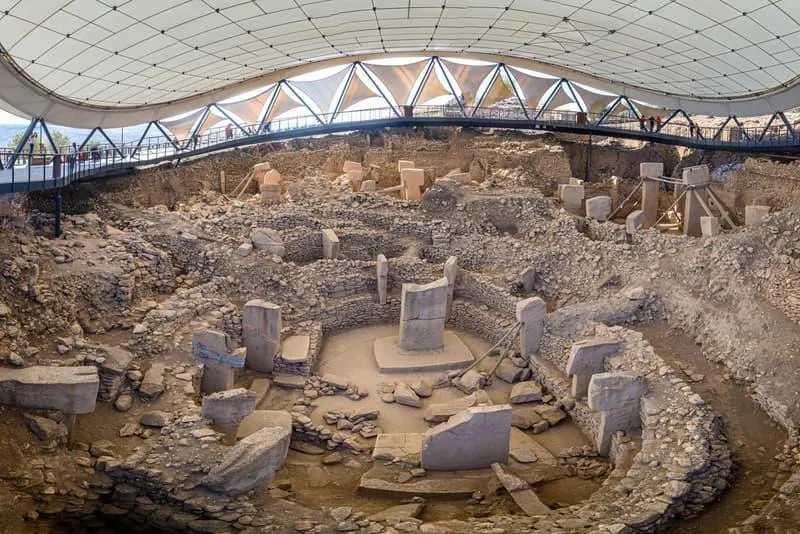
The stone enclosures and T-shaped pillars of Göbekli Tepe under the protective roof

Destination · Southeastern Anatolia

Şanlıurfa & Göbekli Tepe: where history begins

Eleven and a half thousand years ago, long before writing, the wheel or farming as we know it, people on a hilltop near Şanlıurfa carved giant stone pillars covered in foxes, boars and vultures. Göbekli Tepe is older than Stonehenge by six thousand years, and the city at its feet, the city of Abraham, is one of the most fascinating in Türkiye.

Plan your Şanlıurfa & Göbekli Tepe trip

About Şanlıurfa & Göbekli Tepe

The city of prophets, at the edge of Mesopotamia

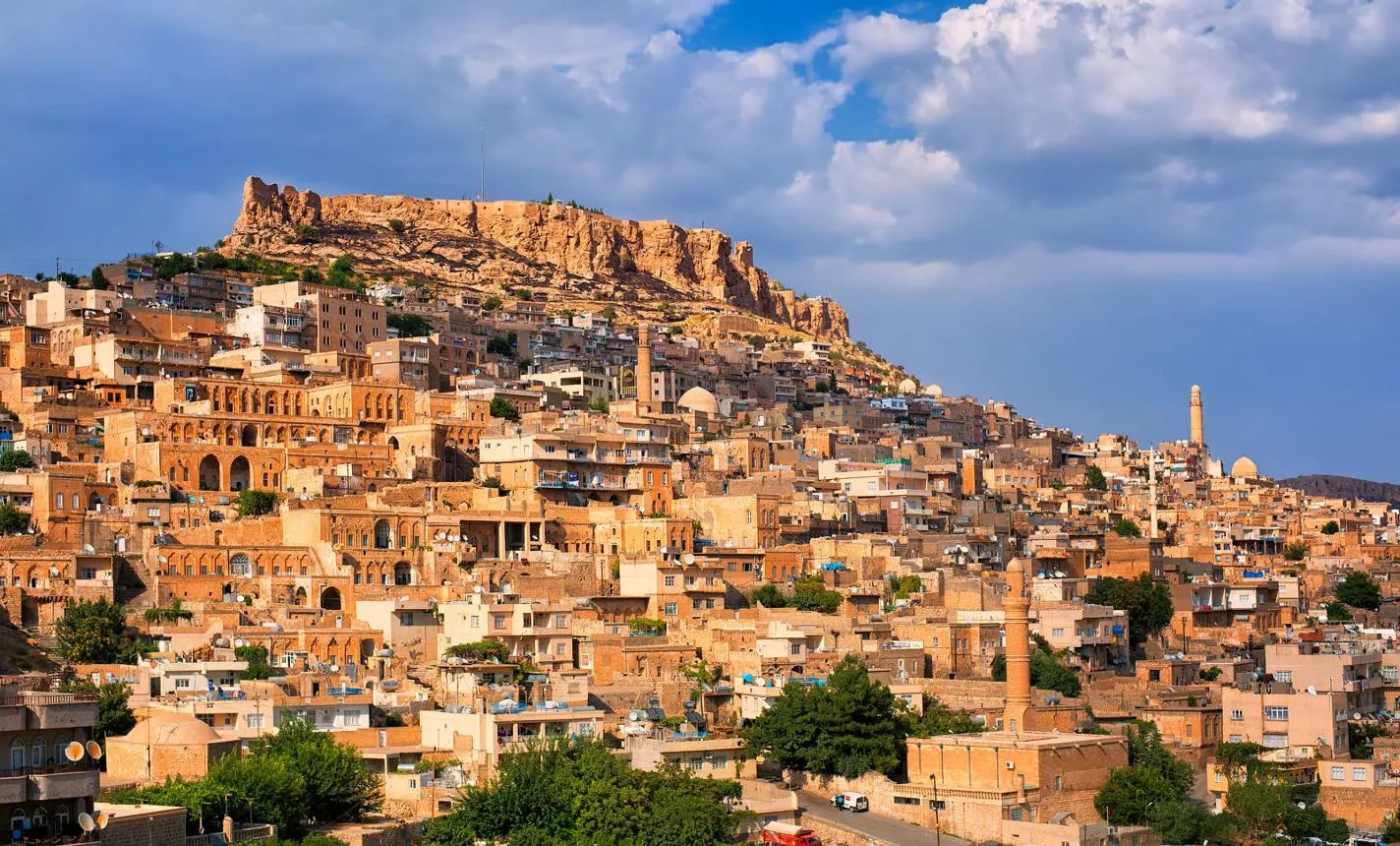
Şanlıurfa stands at the northern edge of the Fertile Crescent, where people first learned to farm. Known to the Greeks and Romans as Edessa, it became one of the first Christian kingdoms; Muslims, Christians and Jews alike honour it as the birthplace of Abraham. Its old city is a maze of honey-coloured stone, with a castle on the hill, sacred pools full of carp and covered bazaars where coppersmiths hammer and tea is poured all day. Combine it with the prehistoric sites of Taş Tepeler, the 'stone hills', and the beehive houses of Harran for a journey to the very beginning of history.

Start planning
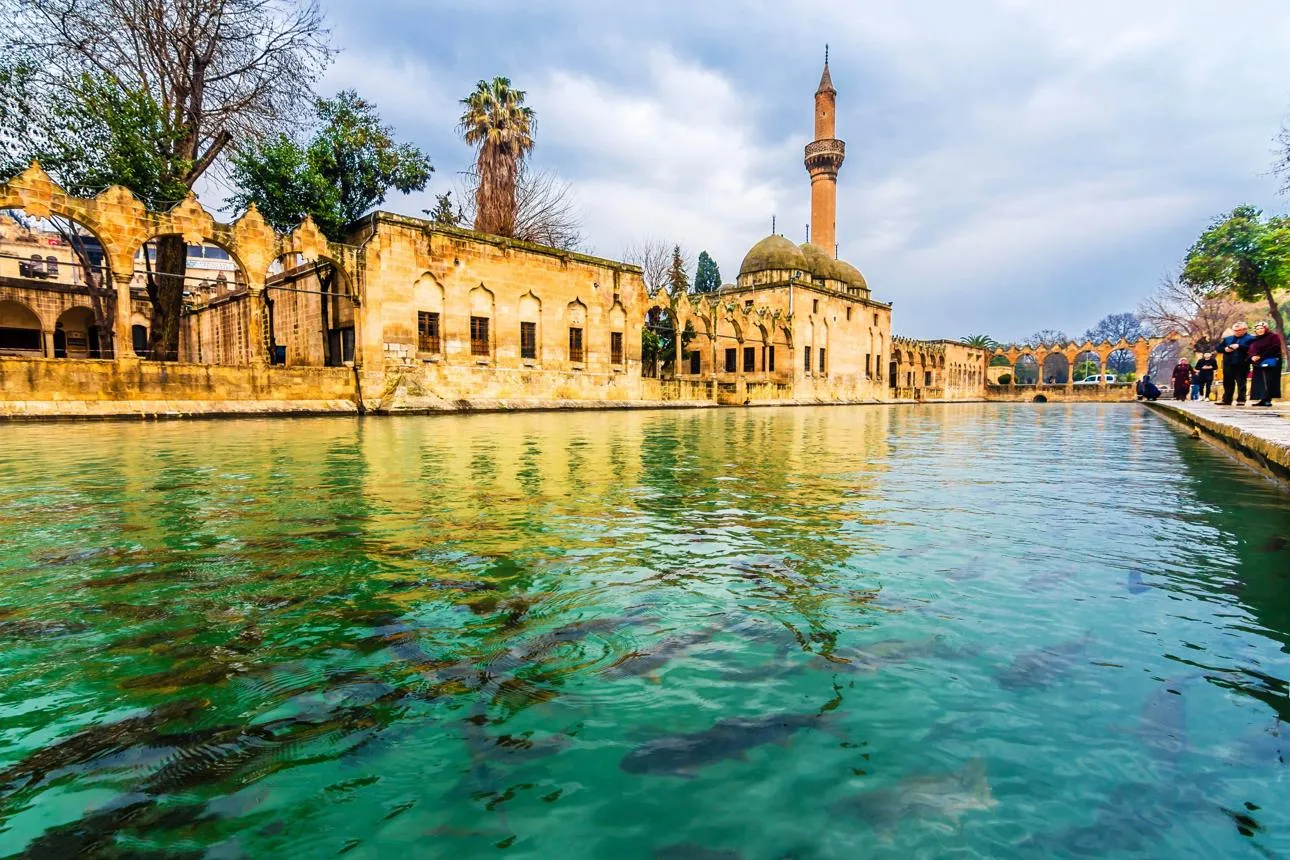
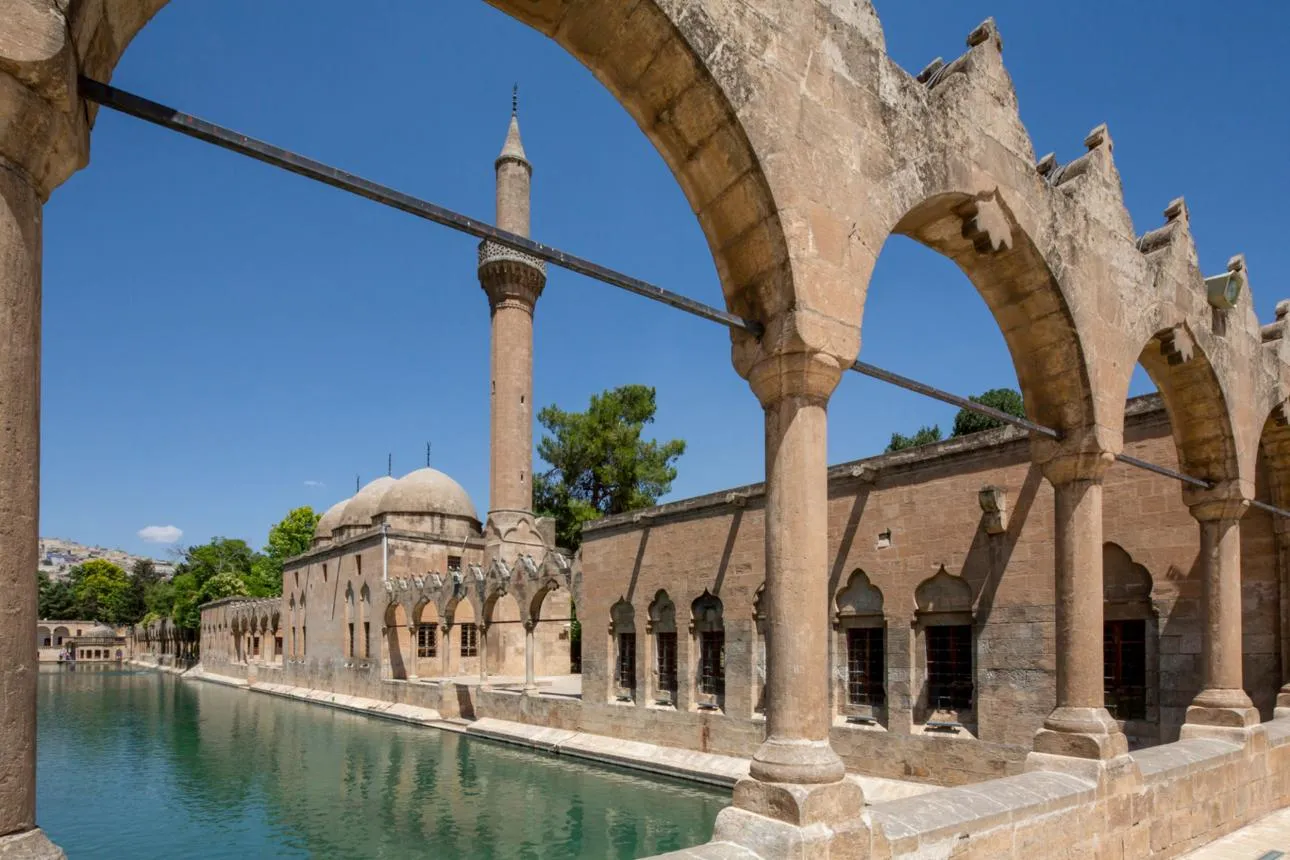
Arches framing the Halil-ur-Rahman Mosque beside the sacred pool of Balıklıgöl

Göbekli Tepe & Taş Tepeler

Göbekli Tepe and the dawn of civilisation

Göbekli Tepe is only the first of more than a dozen prehistoric sites in the hills around Şanlıurfa, together called Taş Tepeler. Start at the museum, then see the real thing.

Black SeaMediterranean SeaAegean SeaŞanlıurfa & Göbekli Tepe
Where Şanlıurfa & Göbekli Tepe is in Türkiye. It combines easily with other destinations into one private route.
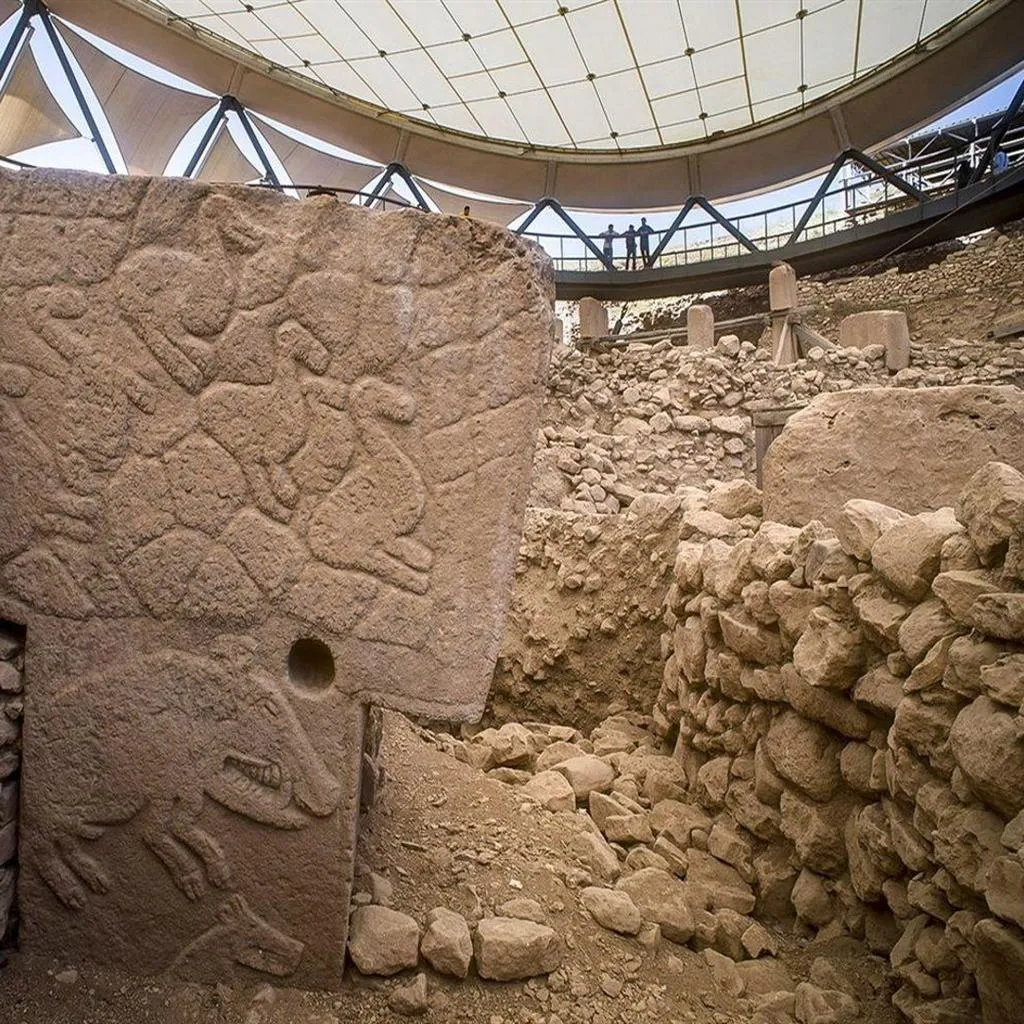
A T-shaped pillar at Göbekli Tepe carved with animal reliefs
Göbekli TepeAbout 15 km northeast of the city

Built from around 9600 BC by hunter-gatherers, Göbekli Tepe's circular enclosures are ringed by T-shaped limestone pillars up to 5.5 metres tall, carved with foxes, boars, snakes, scorpions and vultures, and some with human arms and hands. Since the German archaeologist Klaus Schmidt began excavating here in 1995, it has changed what we know about the origins of religion and society. A UNESCO World Heritage site since 2018.
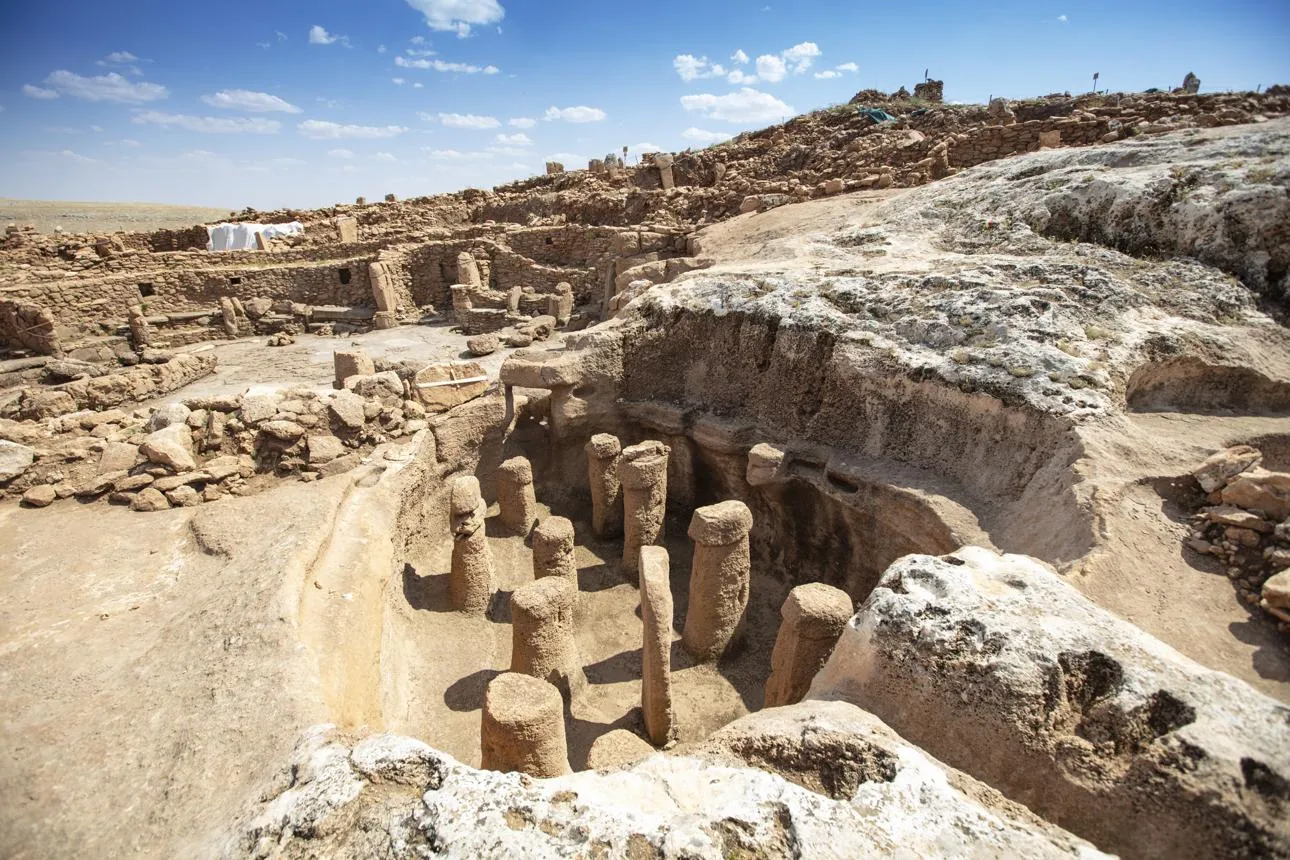
The rock-cut chamber of stone pillars at Karahantepe
KarahantepeAbout 45 km east of the city

Göbekli Tepe's sister site is just as astonishing. In a chamber cut into the bedrock, a carved human head looks out over a group of standing stone pillars, and new discoveries are made almost every season. Visiting it is like watching the story of the first settlements being written as you stand there. Access depends on the excavations, so we check before you go.

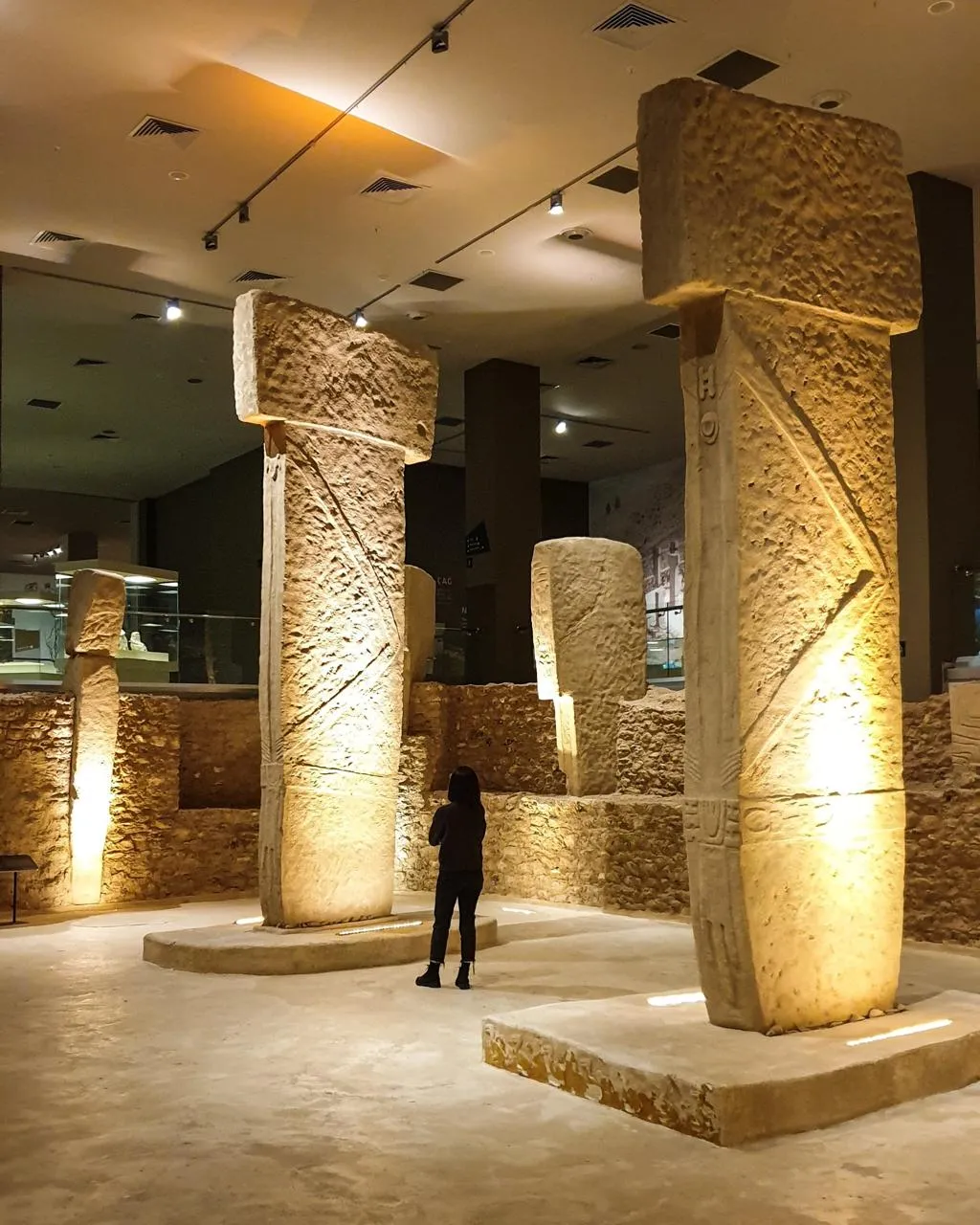
Replica pillars of Göbekli Tepe lit inside the Şanlıurfa Archaeology Museum
Şanlıurfa Archaeology MuseumCity centre

One of the largest museums in Türkiye tells the story of the region from the Stone Age onwards, with a life-size replica of a Göbekli Tepe enclosure and the Urfa Man, an 11,000-year-old statue thought to be the oldest life-size naturalistic sculpture of a human. Visit before Göbekli Tepe and everything you see there will make sense.

The old city

Balıklıgöl, the castle and the bazaars

The heart of Şanlıurfa is easy to explore on foot, between the sacred pools, the mosaics, the castle hill and the covered markets.

The sacred pool of Balıklıgöl full of carp beside the old mosque
BalıklıgölCity of Abraham

Legend says King Nimrod threw Abraham into a fire from the hill above, and God turned the flames into water and the burning logs into fish. Those fish, sacred carp, still swim in the pools of Balıklıgöl and Ayn Zeliha, and no one may catch them. Around them stand the Halil-ur-Rahman Mosque, shady gardens and the cave where tradition says Abraham was born. It is peaceful, beautiful and full of pilgrims.

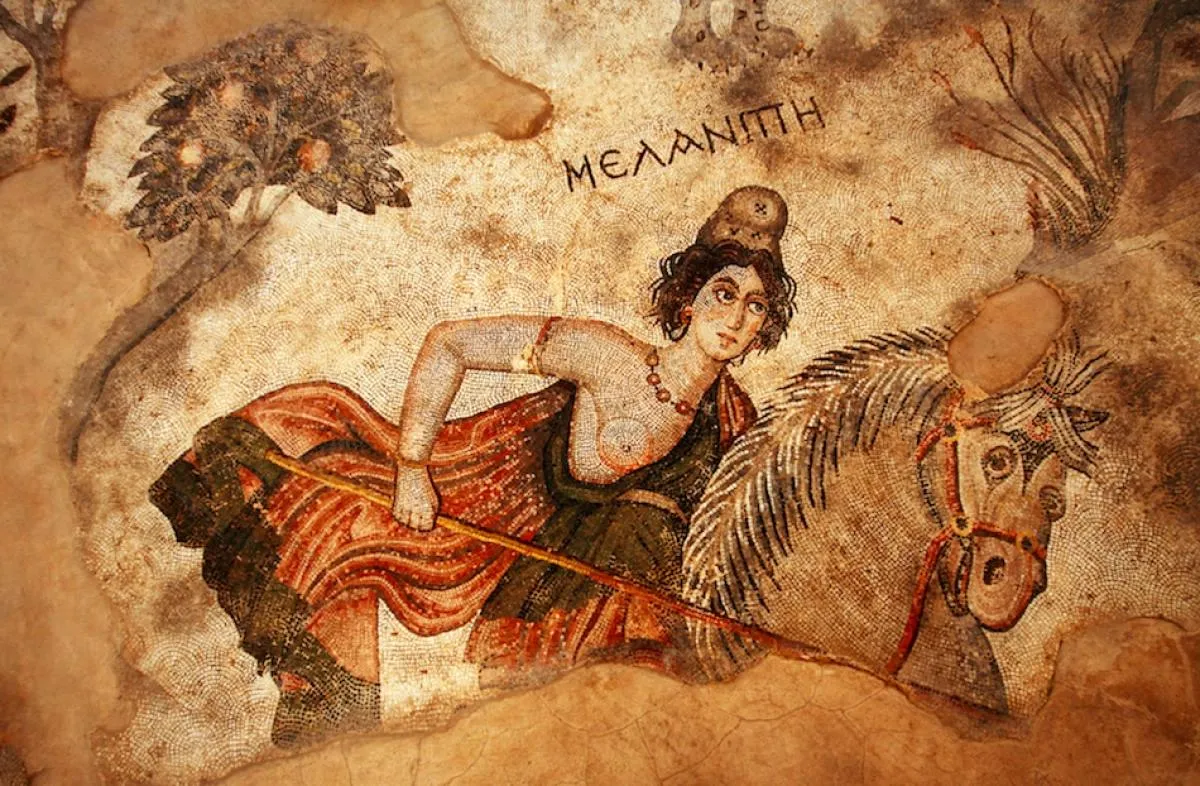
A mosaic of an Amazon queen on horseback labelled Melanippe
Haleplibahçe Mosaic MuseumNext to the Archaeology Museum

Built over the remains of a 5th or 6th-century Roman villa, this museum protects some of the finest mosaics in Türkiye. The most famous show the Amazon queens on horseback, Melanippe and Penthesilea among them, hunting lions and leopards, and scenes from the childhood of Achilles. They give a vivid picture of rich, cultured Edessa.

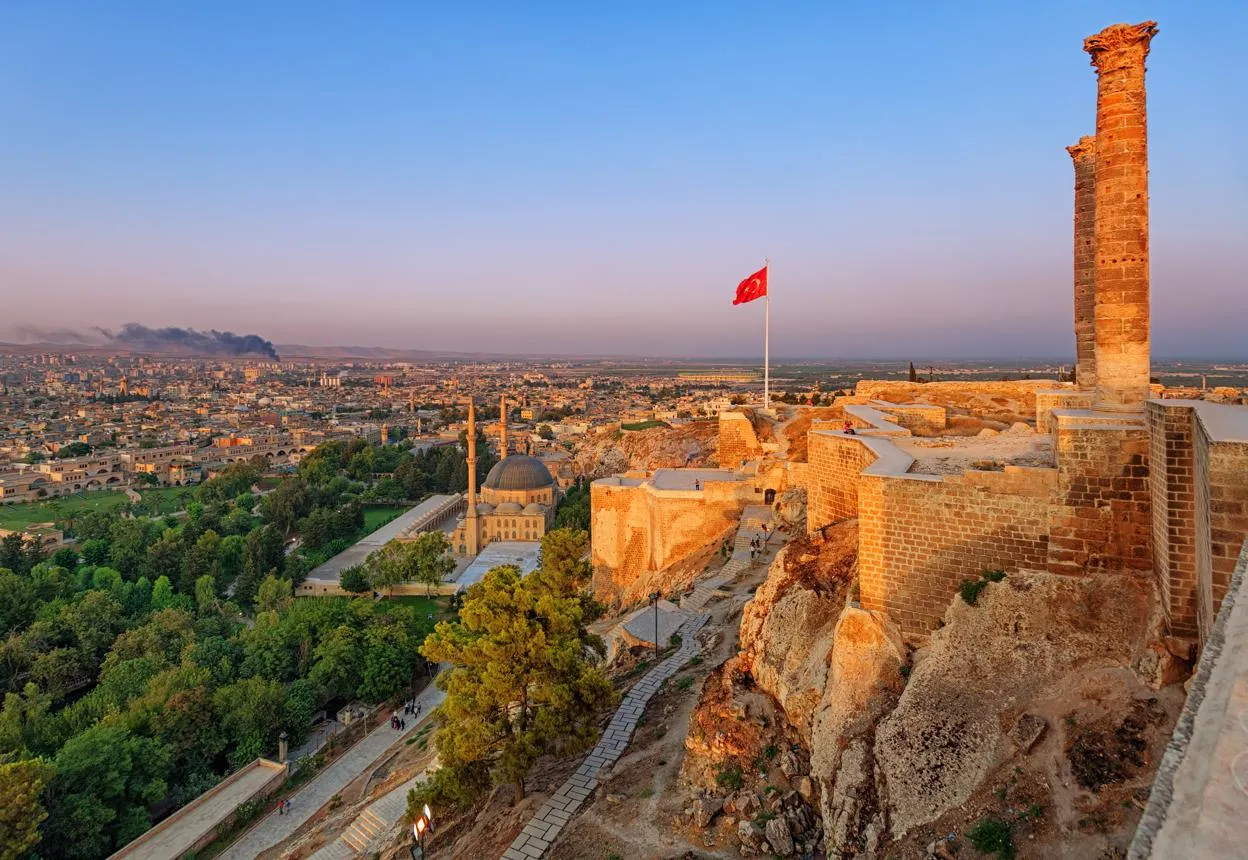
The two columns and walls of Şanlıurfa Castle above the city at sunset
Şanlıurfa CastleAbove Balıklıgöl

On the rocky hill above the sacred pools, two Corinthian columns of the 3rd century AD, known locally as Nimrod's Throne, rise above the walls of the citadel. From the top you look down on the mosques, the gardens of Balıklıgöl and the whole sprawling city, as far as the plain beyond. Access can change, so we check before you climb.

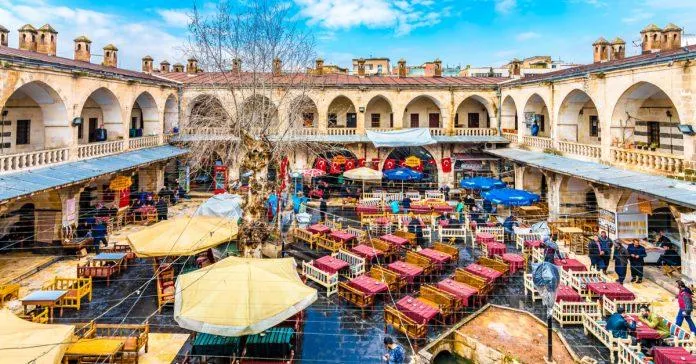
The busy arcaded courtyard of Gümrük Han filled with café tables
Gümrük Han & the BazaarOld commercial quarter

Built in 1562, the Gümrük Han is a stone caravanserai whose courtyard is now the city's favourite place for tea and bitter mırra coffee. All around it, covered bazaars sell spices, isot pepper, copper, scarves and handmade felt. It is the best place to feel the warmth and rhythm of everyday Urfa.

Beyond the city

Harran, Soğmatar, Halfeti and Germüş

Across the plain and along the Euphrates lie beehive villages, ancient temples and a town half under the water. Each is a separate excursion.

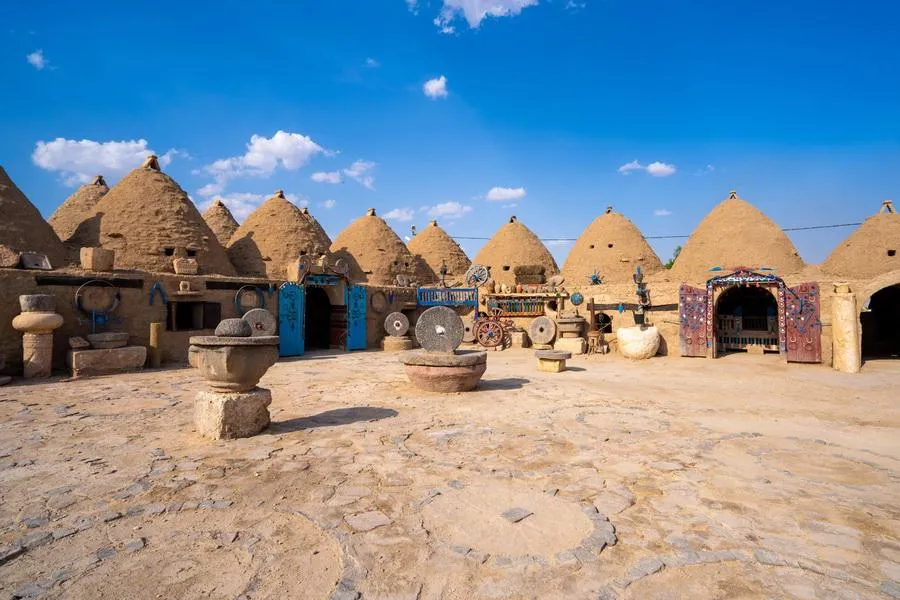
A courtyard of cone-shaped beehive houses in Harran
HarranAbout 45 km southeast

Harran is mentioned in the Book of Genesis as the place where Abraham lived before setting out for Canaan. Its famous beehive houses, cone-domed mud-brick homes that stay cool in the summer heat, stand beside the ruins of a great medieval university, a castle and the walls of the ancient city. Harran is on Türkiye's tentative list for UNESCO World Heritage.

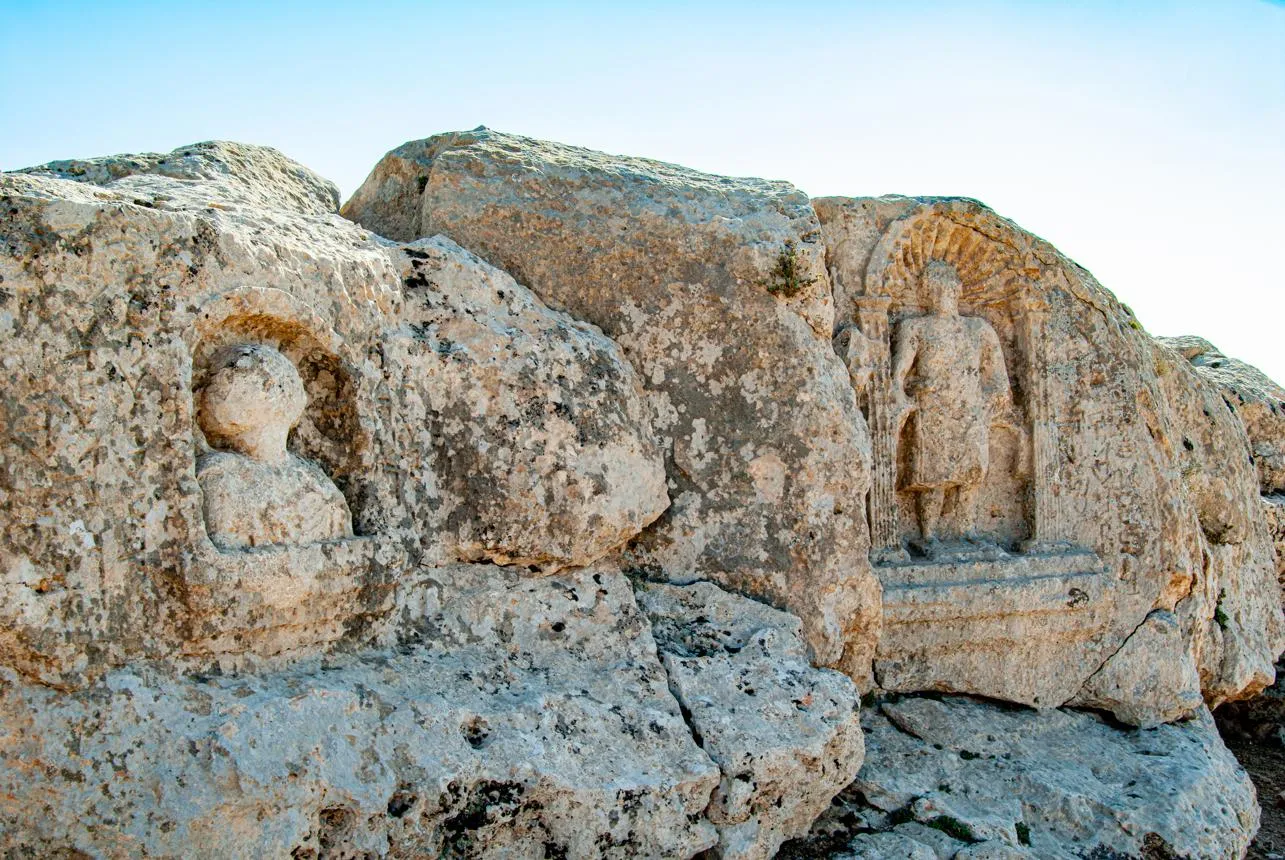
Carved figures in niches on the rock face at Soğmatar
SoğmatarTektek Mountains

On a bare hilltop in the Tektek Mountains, Soğmatar was a sanctuary of the Sabians, who worshipped the moon god Sin and the planets well into the Christian era. Carved figures and 2nd-century inscriptions in Syriac still look out from the rock. It is remote, mysterious and almost untouched by tourism, best combined with Harran.

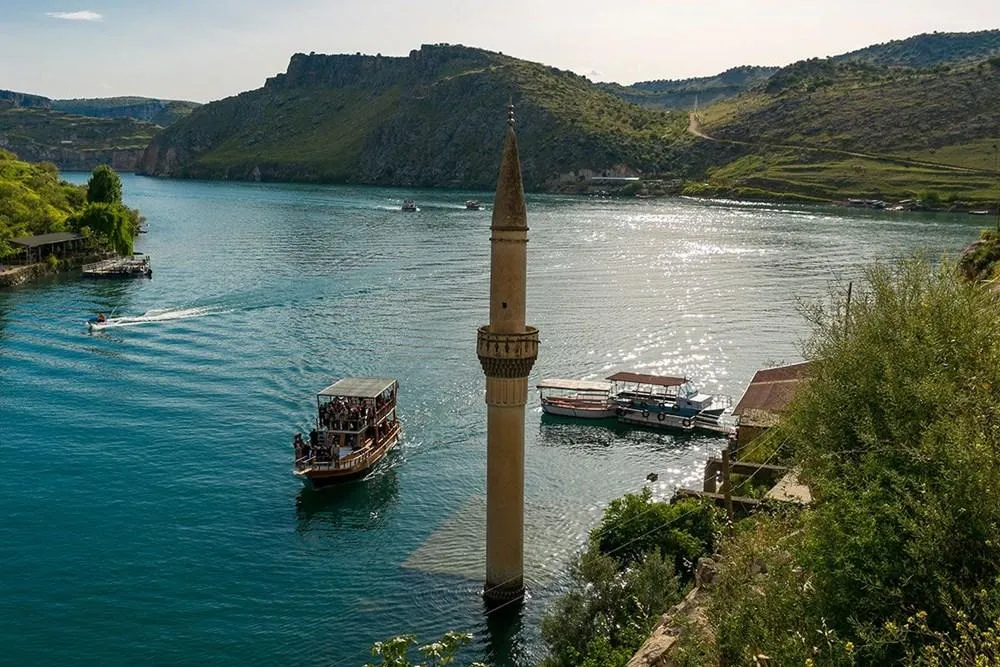
The half-submerged minaret of Halfeti and river boats on the Euphrates
HalfetiAbout 1.5 hours northwest

When the Birecik Dam was filled in 2000, part of the old town of Halfeti disappeared under the Euphrates; only the minaret of its mosque still rises from the water. Take a boat along the steep green gorge to the castle of Rumkale, and look for the famous black roses that grow only here.

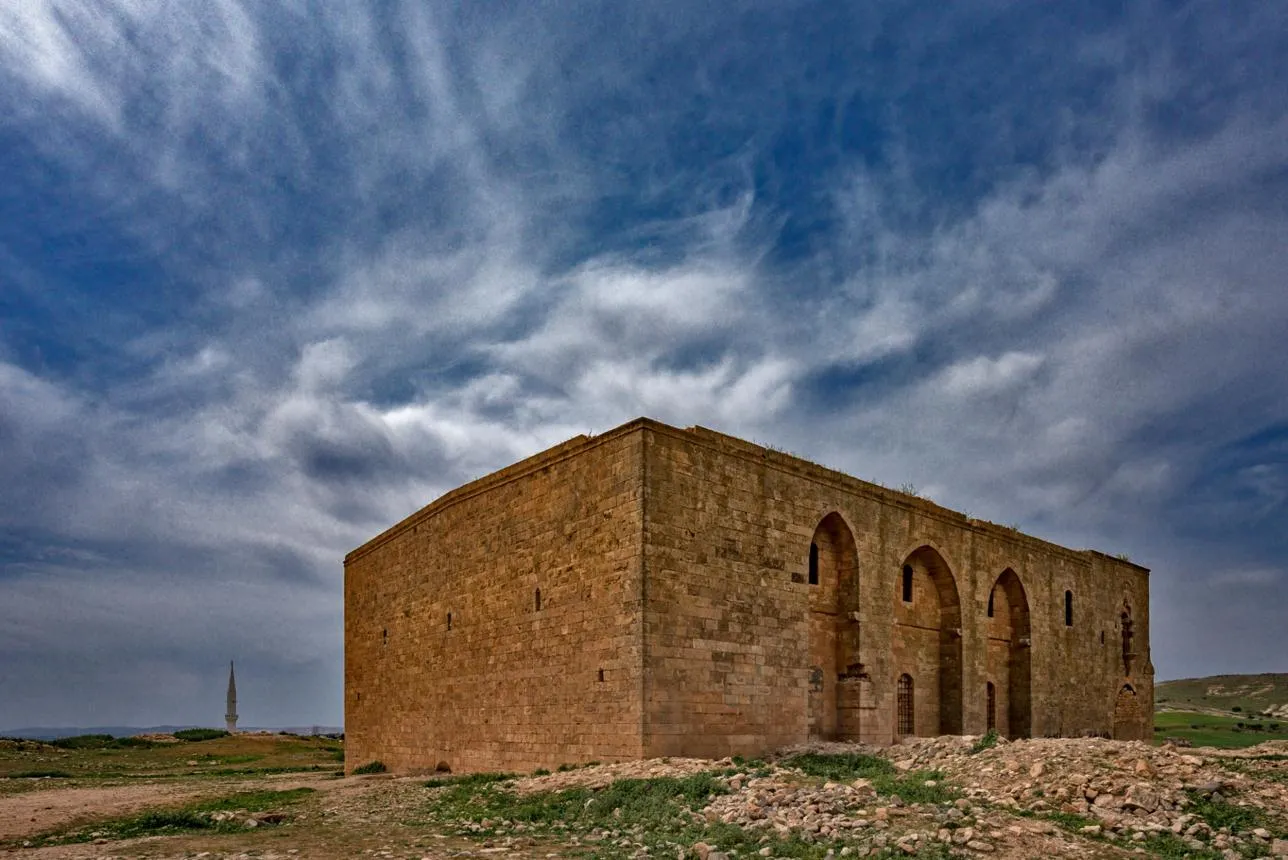
The stone walls and arched windows of Germüş Church under a dramatic sky
Germüş ChurchAbout 15 km from the city

In the village of Dutluca, the tall stone church of Germüş, built by the Armenian community in the 19th century, stands quietly above the plain. It is a striking reminder of the many faiths that have shaped this region over the centuries. Check access before including it in your day.

Experiences

Things to do in Şanlıurfa

Every private Şanlıurfa tour can mix these experiences in any order, at your own pace.

The origins of architecture

Göbekli Tepe and, where access allows, the wider Taş Tepeler sites.

Sacred sites & traditions

Balıklıgöl, its mosques and the old religious quarter, and the stories of Abraham.

Ancient Mesopotamia

Harran's beehive houses and ruins, and the temples of Soğmatar.

A boat on the Euphrates

Halfeti's dramatic gorge and the remains of the old town, from the water.

Şanlıurfa's cuisine

Çiğ köfte, Urfa kebab, lahmacun, isot pepper and bitter mırra coffee.

Trip length

How many days should you spend in Şanlıurfa?

Göbekli Tepe and the city highlights fit into one long day, but we recommend two or three days to add the museums and Harran without rushing, and four or five for Halfeti and the Taş Tepeler sites.

  1. 1 day

    Göbekli Tepe & the city

    Göbekli Tepe, Balıklıgöl and the bazaar, carefully timed around the driving and opening hours.

  2. 2 days

    Archaeology & heritage

    The Archaeology Museum, Haleplibahçe, Göbekli Tepe and the old quarters at an easy pace.

  3. 3 days

    The city, Göbekli Tepe & Harran

    Add a full excursion to Harran and the sites of the countryside.

  4. 4–5 days

    The wider region

    Add Halfeti, Karahantepe, Soğmatar or more, ideal for archaeology lovers.

Good to know

Şanlıurfa travel tips

Best time to visit

Spring (March to May) and autumn (September to November) are the most comfortable seasons. Summer is extremely hot, often over 40°C, so visit outdoor sites early and spend the afternoon in museums. Winter is mild and quiet, with occasional rain.

Getting there

Şanlıurfa GAP Airport has direct flights from Istanbul and Ankara, and Göbekli Tepe is about 20 minutes from the city by car. Şanlıurfa combines easily with Mardin, about 2.5 to 3 hours away, and Mount Nemrut, about 3 hours away.

Visiting sacred places

Şanlıurfa is a conservative, devout city. Dress modestly, especially at Balıklıgöl and in the mosques, where women cover their hair. Göbekli Tepe has little shade: bring a hat, sun cream and water.

Tailor-made for you

Private Şanlıurfa tours we can plan

World-changing archaeology, religious heritage and authentic local culture: every tour is built around your interests, your dates and your pace.

Let's plan your holiday

Plan your private Şanlıurfa tour

From the pillars of Göbekli Tepe to the sacred pools of Balıklıgöl and the beehive houses of Harran: tell us your dates and interests, and we will plan a private itinerary and email it with a price.

  1. 1
    Tell us your wishes

    Choose the places you would love to see, how many of you are travelling and for how long.

  2. 2
    Receive your itinerary

    We write a private programme just for you and email it with a personal price.

  3. 3
    Shape it together

    Change anything you like. We refine the programme with you until it feels just right.

Which places would you like to see?

Mix and match freely: pick places from as many themes as you like.

Göbekli Tepe & Taş Tepeler
The old city
Beyond the city
Experiences

Free and without obligation. We reply by email within 24 hours.

Our tour categories

From history and faith to hidden villages and the coast, find the journey that suits you. Every one can include Şanlıurfa & Göbekli Tepe.

Keep exploring

Explore other destinations

All destinations
IstanbulMarmaraCappadociaCentral AnatoliaEphesusAegean coastPamukkaleAegean regionAntalyaMediterranean coastBodrumAegean coastŞirinceAegean hillsAssosNorth AegeanGallipoli & TroyDardanellesKaş & KekovaLycian coastFethiyeLycian coastDalyanMuğla coastAnkaraCentral AnatoliaKonyaCentral AnatoliaSafranboluBlack Sea regionMardinSoutheastern Anatolia
Mount NemrutSoutheastern Anatolia

Ready to explore Şanlıurfa & Göbekli Tepe?

Discover Şanlıurfa your way

An extraordinary journey through the history and cultures of southeastern Türkiye, on its own or combined with Mardin and Mount Nemrut, planned around your interests, your dates and your pace.

Plan your trip