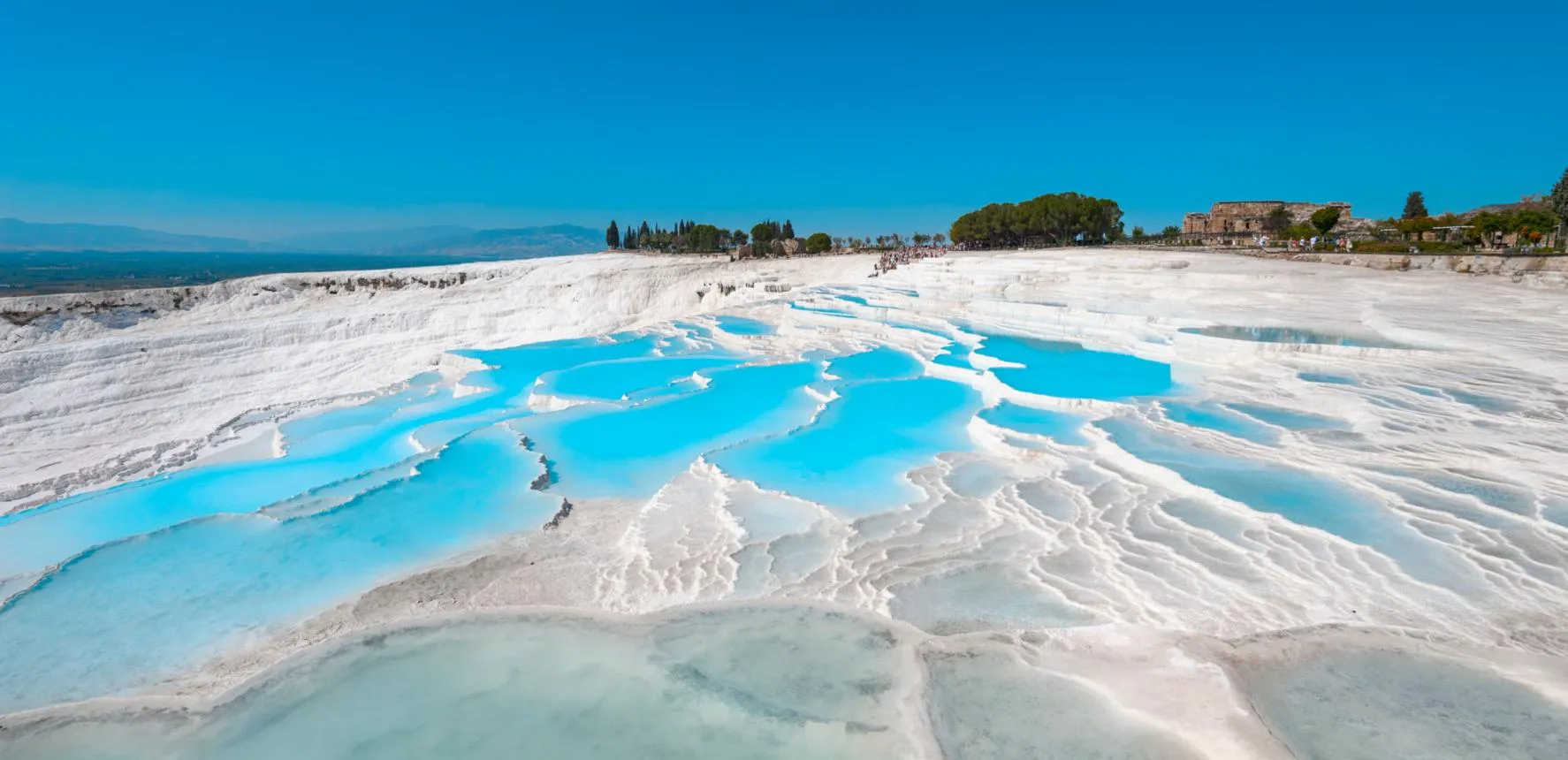
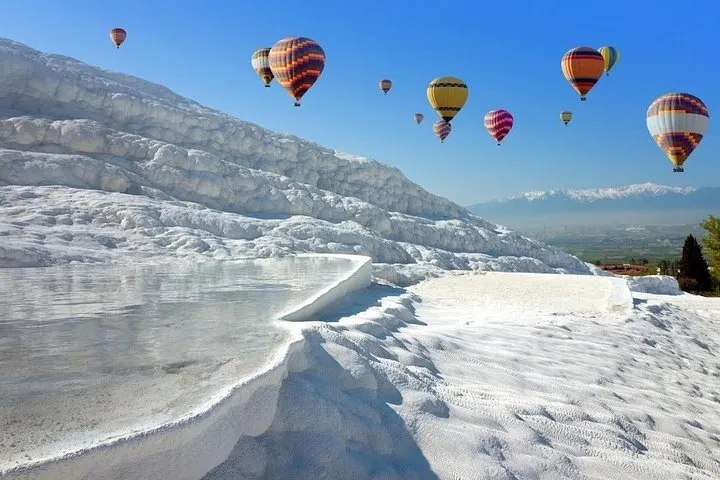
Turquoise pools on the white travertine terraces of Pamukkale under a blue sky

Destination · Aegean region

Pamukkale: white travertines, ancient Hierapolis and thermal springs

From the road it looks like snow on a summer hillside. Up close, Pamukkale, the 'cotton castle', is a cascade of white limestone terraces filled with warm, turquoise water, and above it lie the ruins of Hierapolis, a Roman spa town where people came to bathe two thousand years ago.

Plan your Pamukkale trip

About Pamukkale

Where nature built a monument

Thermal water at around 35°C rises from the ground above Pamukkale, rich in calcium. As it flows down the slope it cools, releases its minerals and leaves behind layer upon layer of brilliant white travertine. It took thousands of years to build the terraces, and it is still happening. The Greeks and Romans built a whole city around these springs, and today Pamukkale and Hierapolis share a place on the UNESCO World Heritage list. Come for the terraces, stay for the history, and if you can, be there when the evening light turns the white rock pink and gold.

Start planning
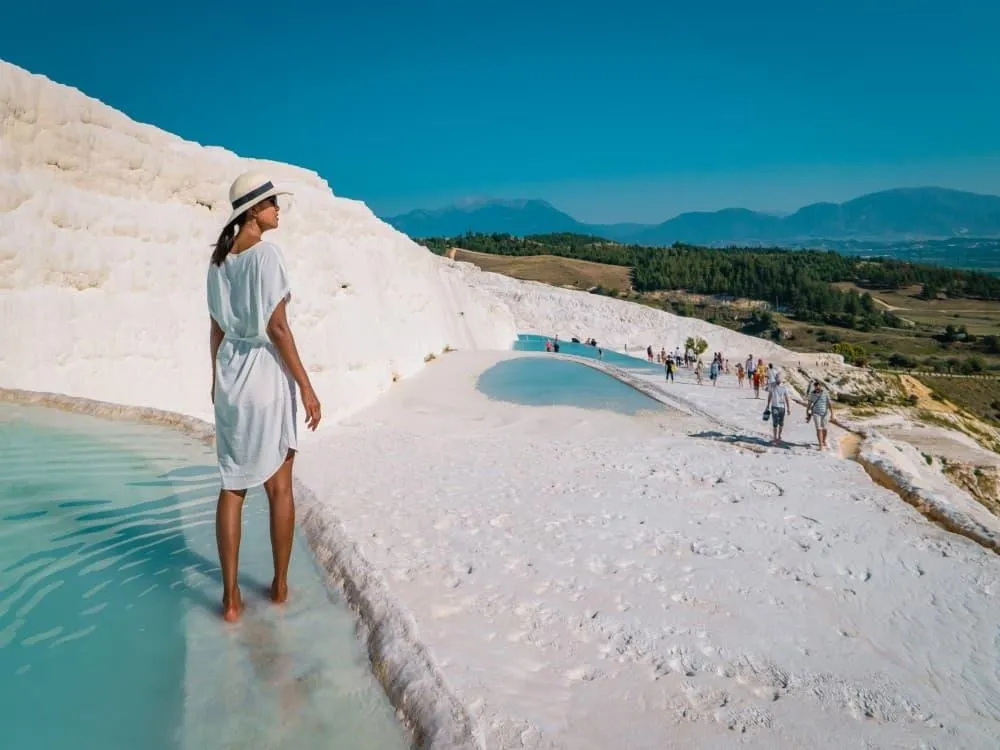
A traveller in a sun hat standing barefoot in a shallow pool on the Pamukkale terraces

Pamukkale & Hierapolis

The best places to visit in Pamukkale

The terraces and the ancient city sit side by side on the same plateau, so you can walk from one to the other. Give them a full day if you can.

Black SeaMediterranean SeaAegean SeaPamukkale
Where Pamukkale is in Türkiye. It combines easily with other destinations into one private route.
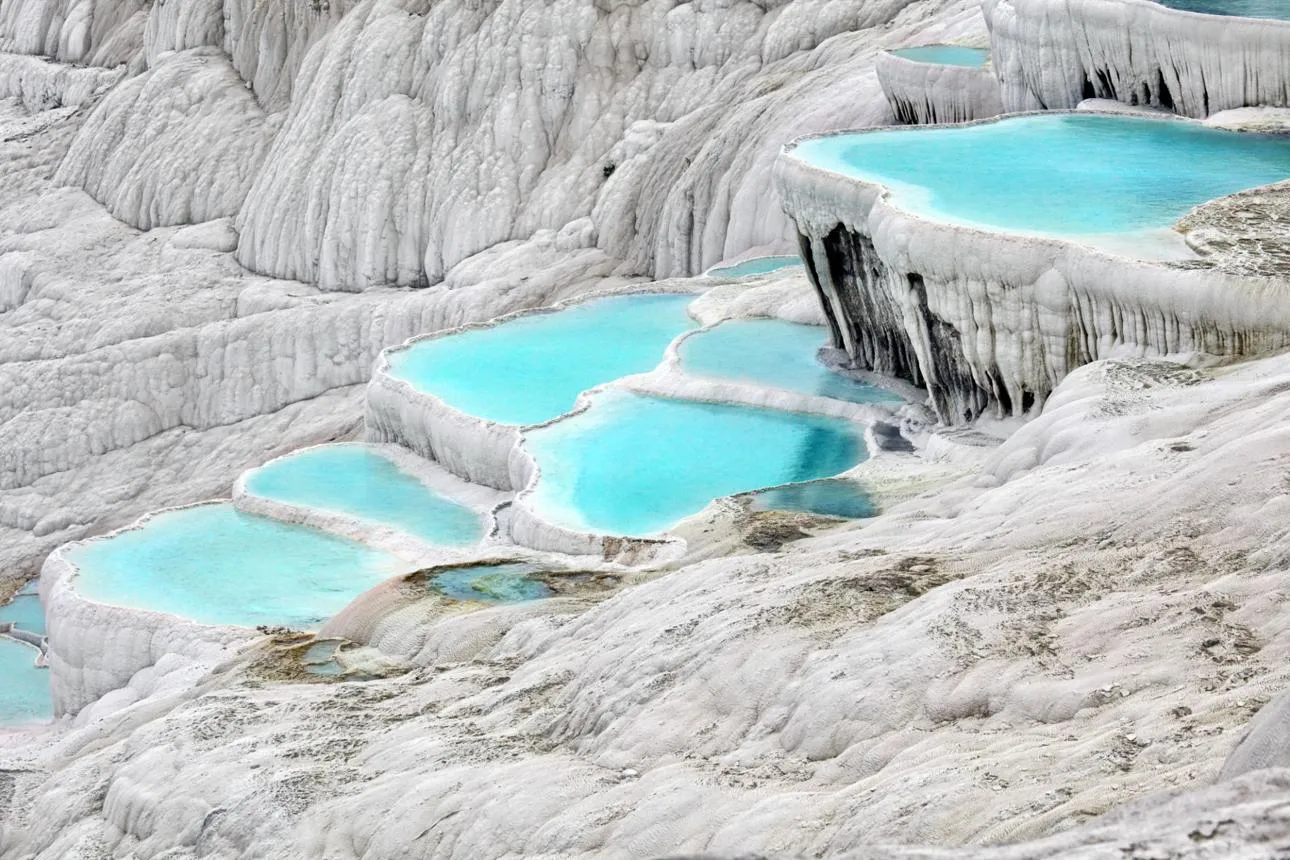
Shallow turquoise pools stepping down the white travertine terraces
Pamukkale TravertinesPamukkale · Barefoot only

Take off your shoes at the bottom and walk up the marked path through shallow pools of warm, milky-blue water. Underfoot the travertine is soft in places and ridged in others, and the view over the plain grows wider with every step. To protect the site, only some pools hold water at any time, and visitors stay on the designated route.

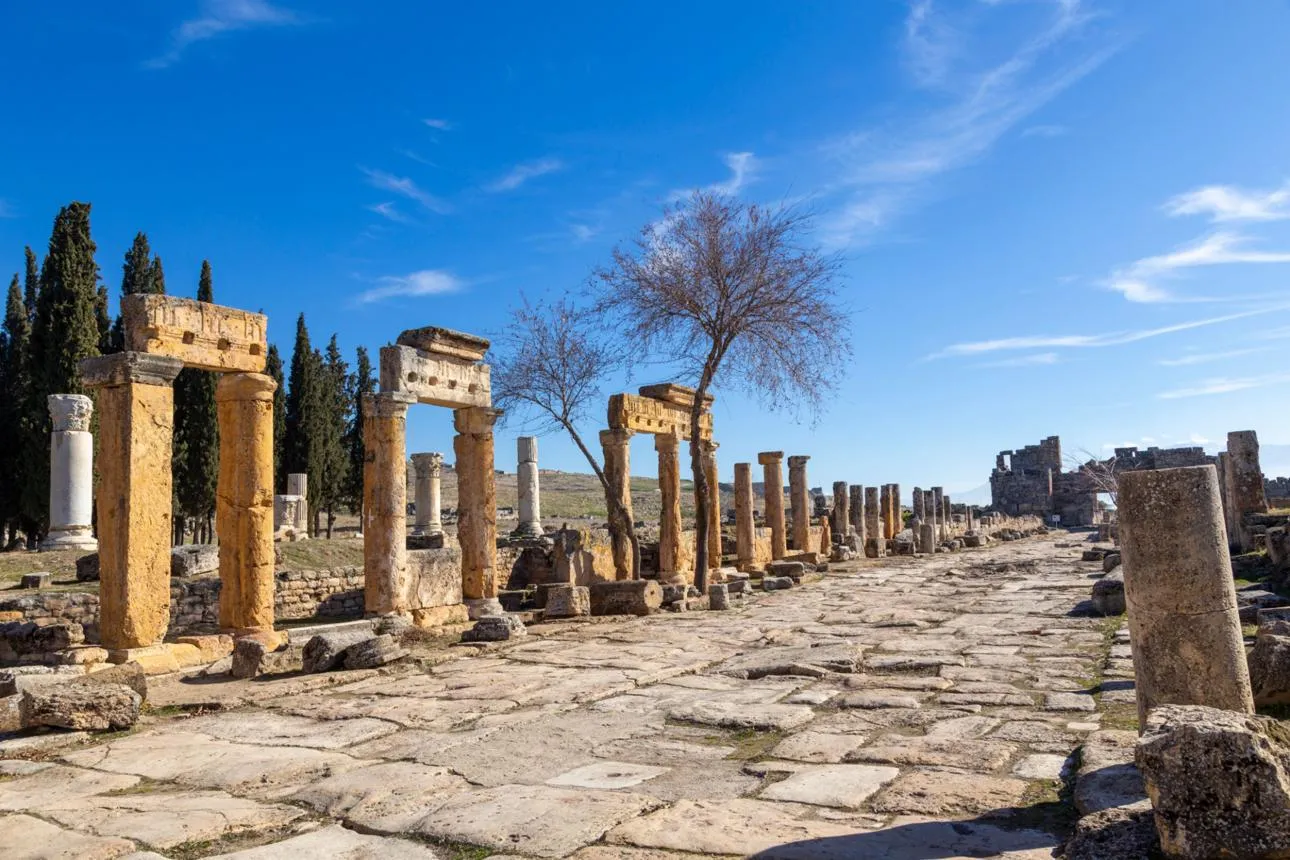
Columns and stone arches lining Frontinus Street in Hierapolis
Hierapolis Ancient CityAbove the terraces

Founded in the 2nd century BC by the kings of Pergamon, Hierapolis grew into one of the great spa towns of the Roman world. Stroll down Frontinus Street, its main avenue, past the remains of baths, temples, fountains and the monumental Frontinus Gate. People came here for healing, for pleasure and to honour the gods of the springs.

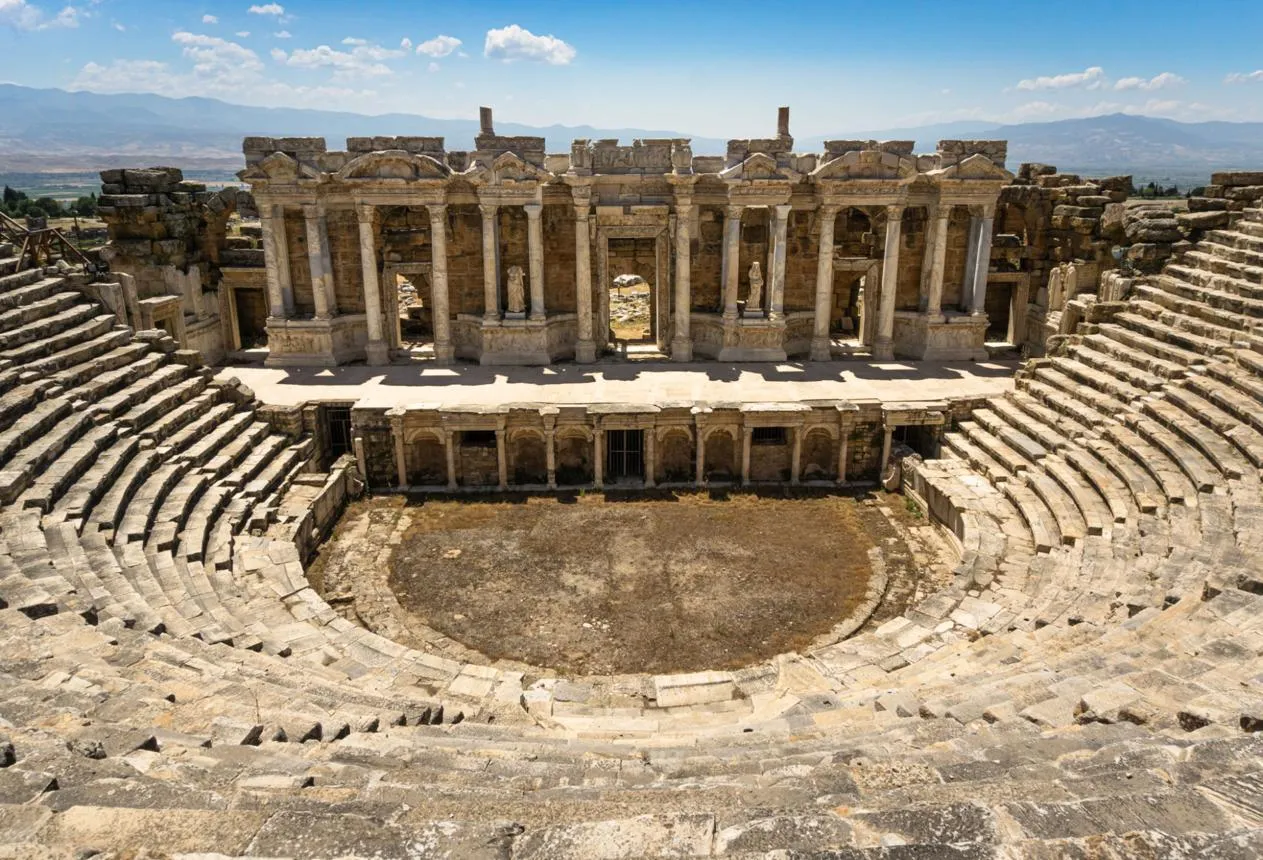
The restored stage building and stone seats of the Hierapolis theatre
Hierapolis TheatreHierapolis

Set into the hillside above the city, the Roman theatre seated around 12,000 people, and its restored stage building is one of the finest in Turkey. Look for the carved reliefs of Apollo, Artemis and Dionysus. Climb to the top rows: the view over the ruins and the valley is worth the effort.

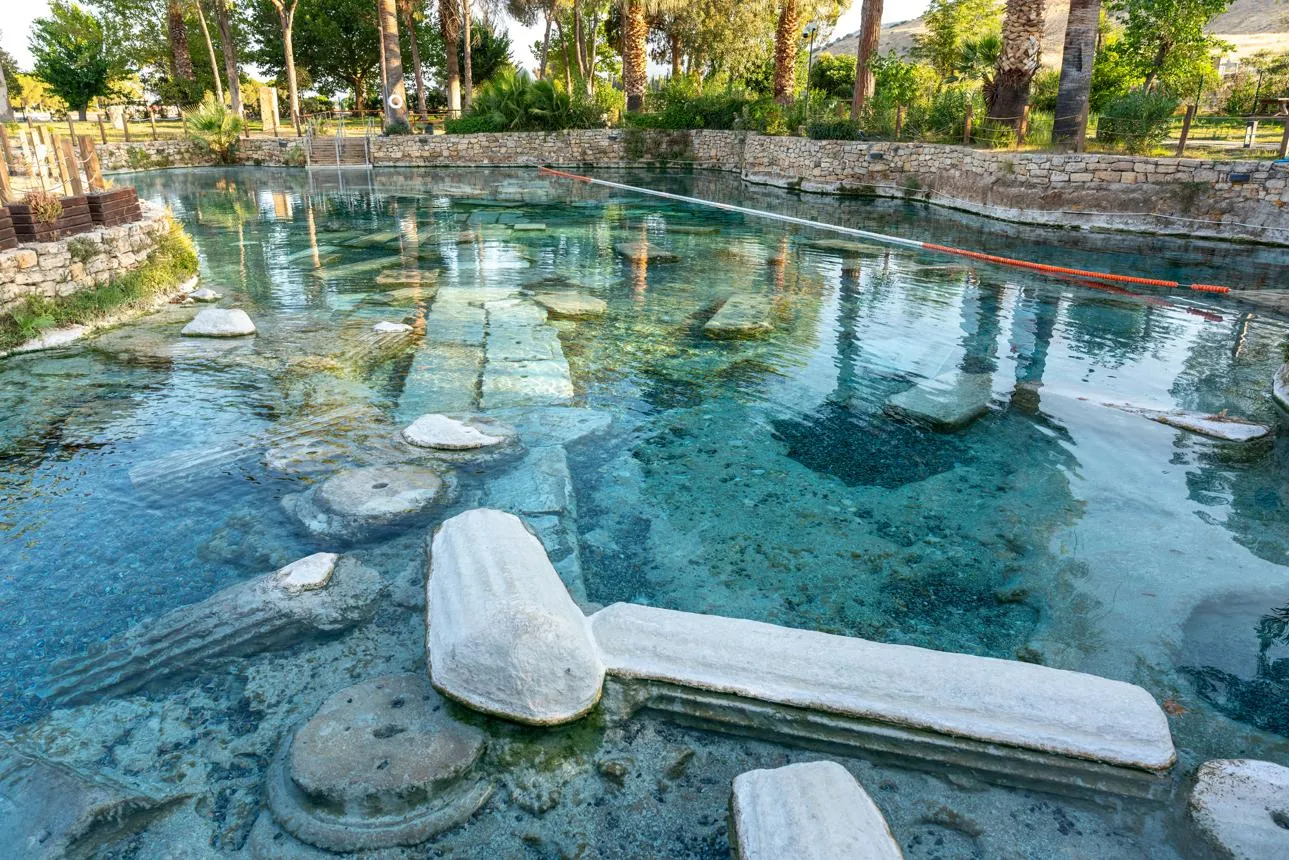
Fallen marble columns under the clear water of Cleopatra's Pool
Cleopatra's Pool (Antique Pool)Hierapolis · Separate ticket

Here you swim in warm thermal water, around 36°C, over marble columns that fell into the pool during an ancient earthquake. The story that Cleopatra bathed here is a lovely legend rather than history, but the experience is real enough. Swimming has its own ticket, and opening hours can change.

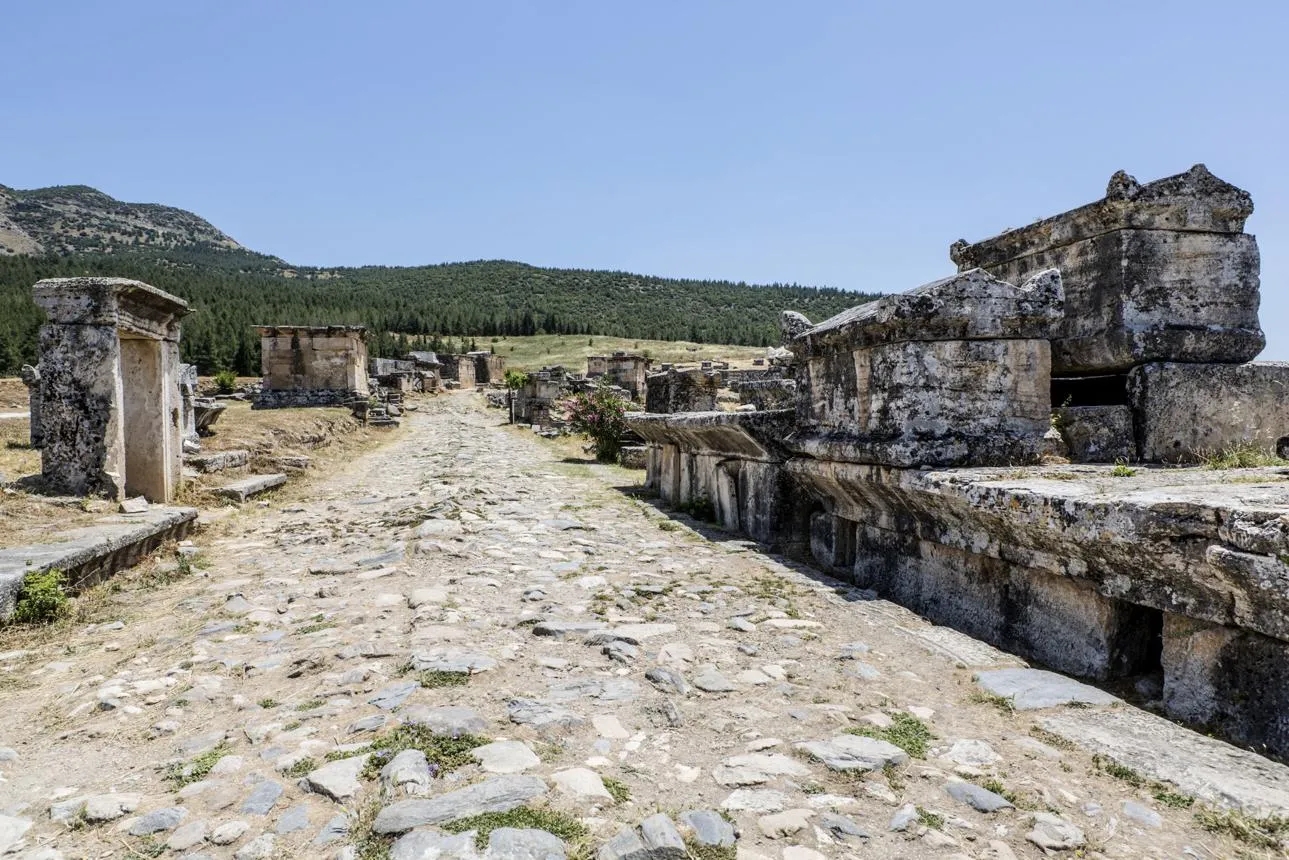
An ancient road lined with stone tombs and sarcophagi in the Hierapolis necropolis
The NecropolisNorthern Hierapolis

One of the largest ancient cemeteries in Turkey stretches for nearly two kilometres along the old road, with more than a thousand tombs, sarcophagi and house-shaped burial monuments. Many visitors who came to Hierapolis for its healing waters were buried here. It is quiet, haunting and fascinating.

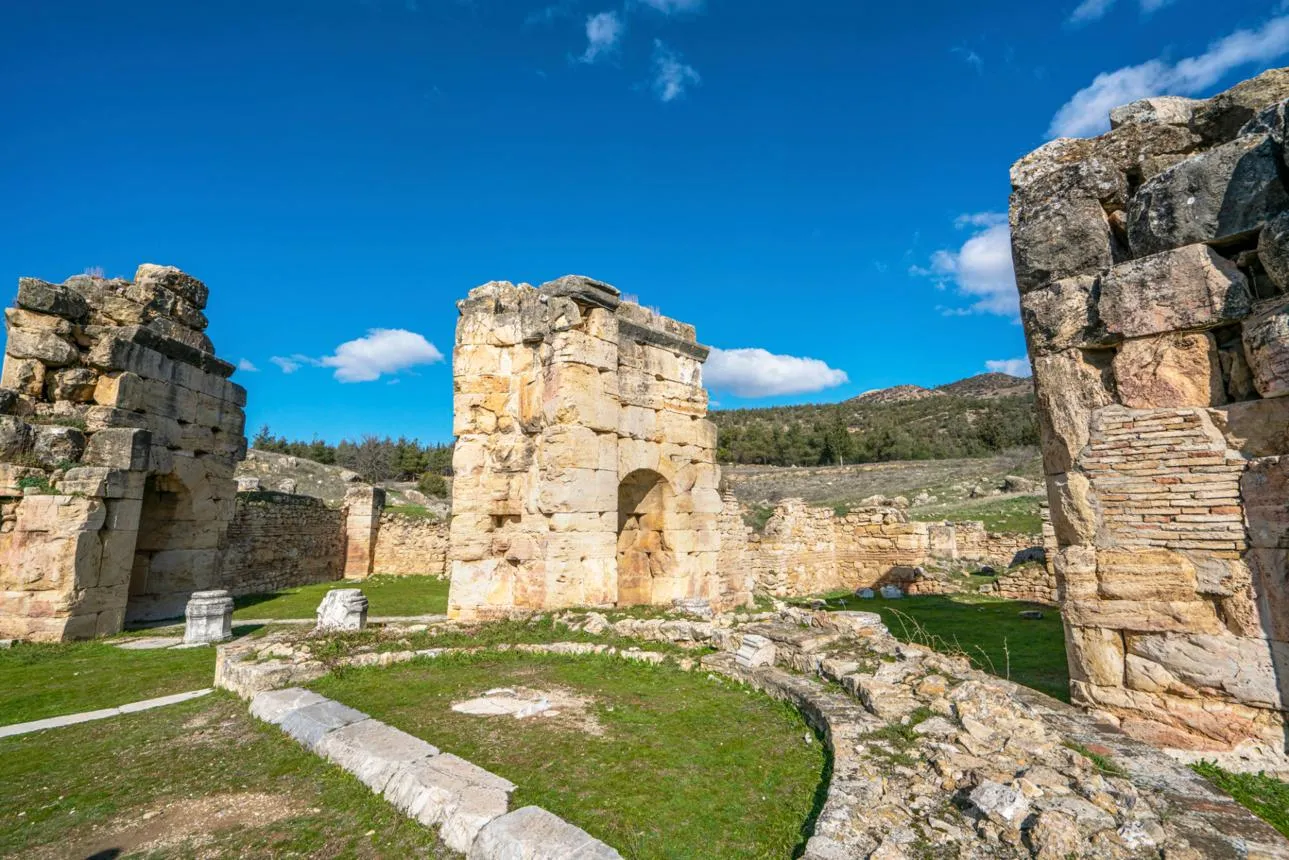
Stone walls and arches of St Philip's Martyrium on the hillside
St Philip's MartyriumHillside above Hierapolis

Tradition says the apostle Philip was martyred in Hierapolis, and in the 5th century an octagonal shrine was built on the hill in his honour. In 2011 archaeologists found a tomb believed to be his in a church nearby. Climb the old pilgrims' path for a moving visit and one of the best views of the site.

Beyond the terraces

Near Pamukkale: Laodicea, Karahayıt and Aphrodisias

With an extra half day or a longer journey, these nearby places add history, faith and another kind of thermal water.

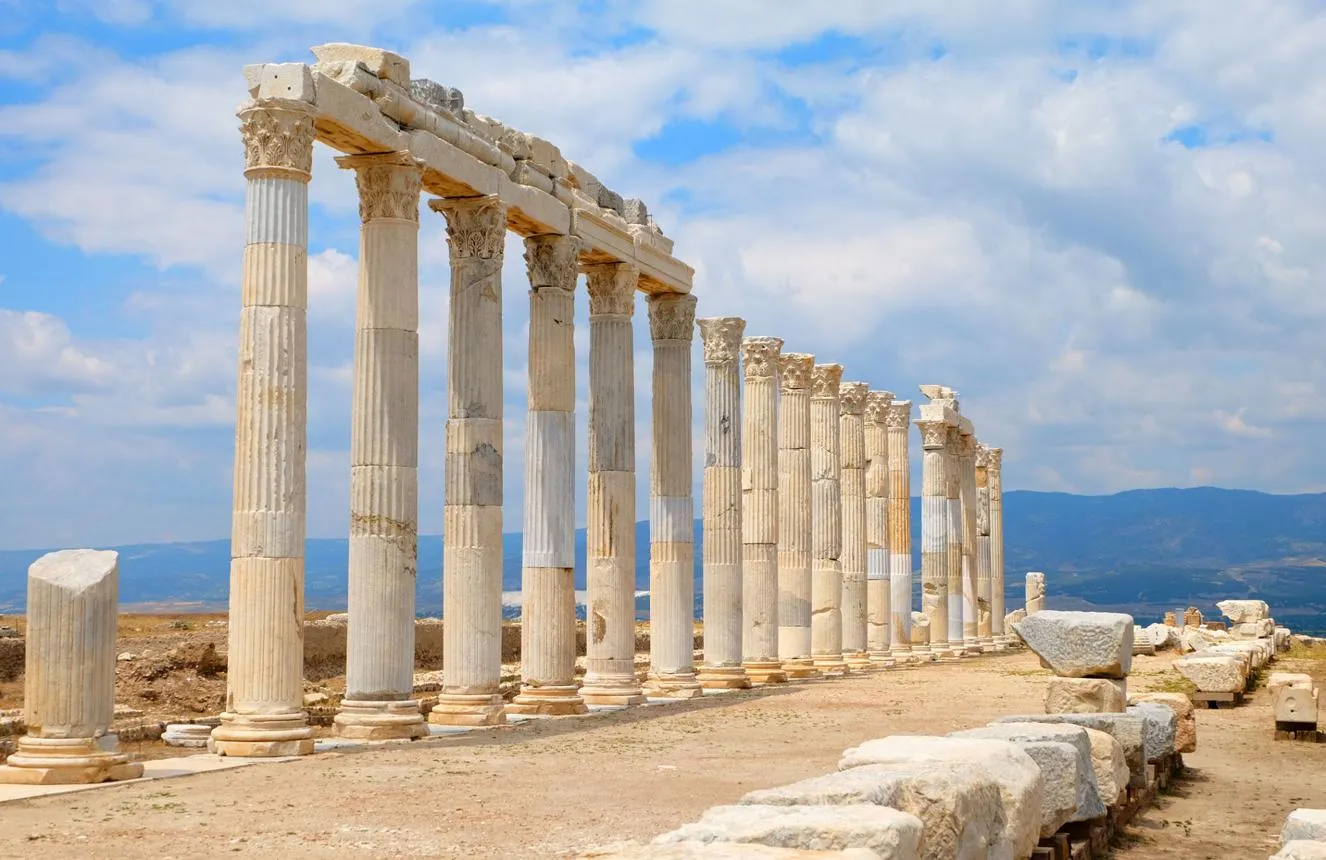
A long row of marble columns along a street in Laodicea
Laodicea Ancient CityDenizli · About 15 minutes away

Laodicea was a rich city of bankers, wool merchants and doctors, and one of the Seven Churches of Revelation, the one famously called 'lukewarm'. Excavations have brought back marble streets lined with columns, two theatres, a stadium and an early church. It is easy to combine with Pamukkale on the same day.

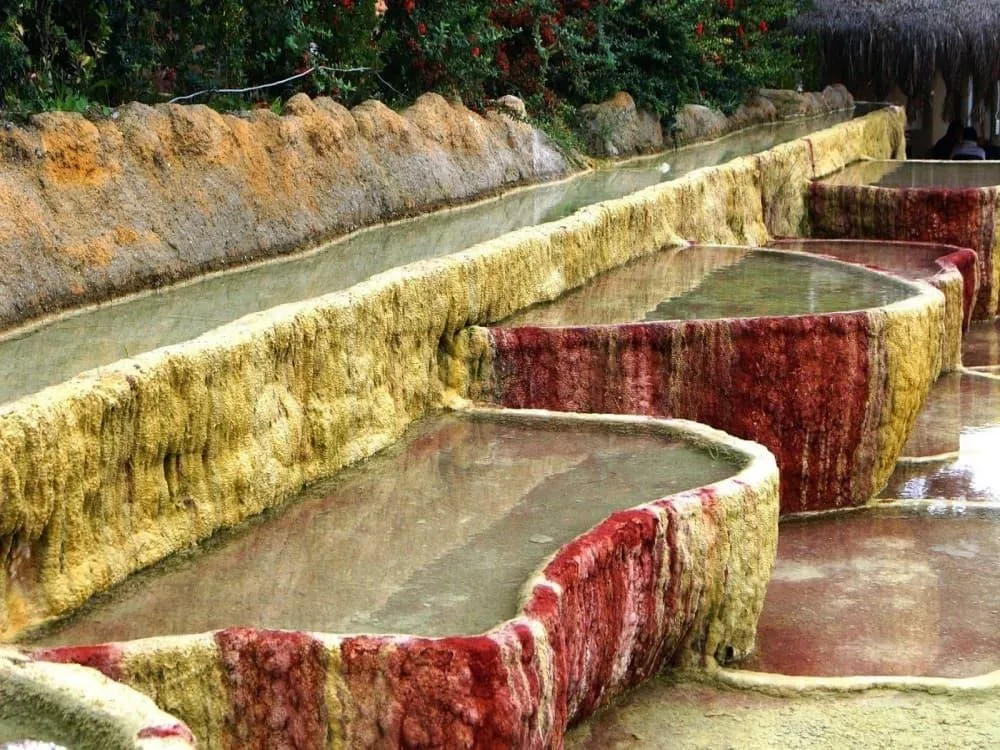
Red and yellow mineral basins of the Karahayıt thermal springs
Karahayıt Red SpringsAbout 5 km from Pamukkale

In the village of Karahayıt, iron-rich water comes out of the ground hot, and colours the rock red, orange and green as it cools. It looks nothing like the white terraces just down the road. The village is full of thermal hotels, a good place to stay if you want to soak at the end of the day.

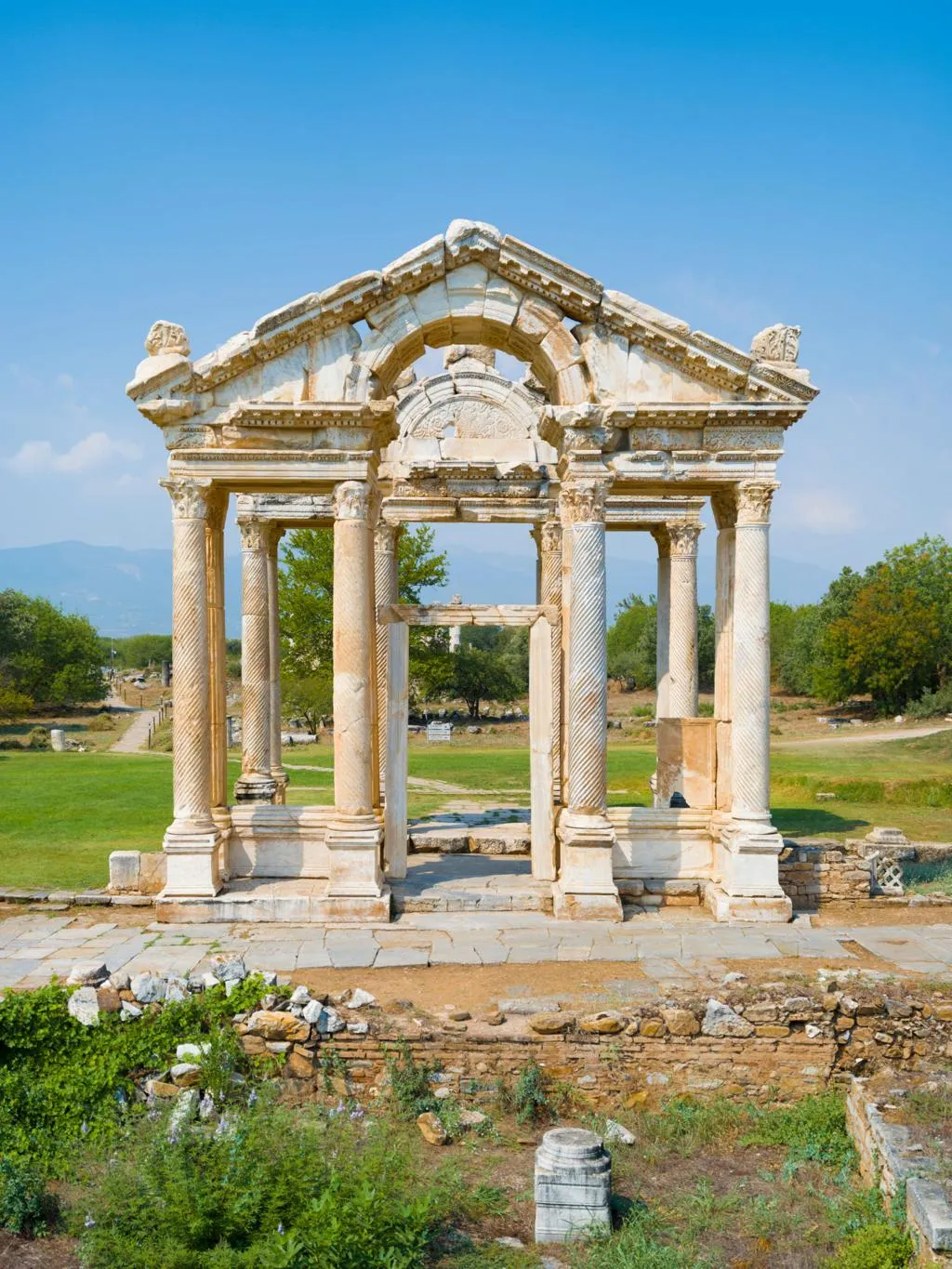
The marble Tetrapylon gate of Aphrodisias with its spiral-fluted columns
Aphrodisias Ancient CityAbout 1.5–2 hours away

Named after Aphrodite and famous for its school of sculptors, Aphrodisias is one of the most beautiful ancient sites in Turkey, and a UNESCO World Heritage site since 2017. See the elegant Tetrapylon gate, a stadium for 30,000 people and a museum full of marble portraits. It is best planned as part of a longer private itinerary.

Experiences

Things to do in Pamukkale

Every private Pamukkale tour can mix these experiences in any order, at your own pace.

Walk the travertines

Barefoot along the white terraces, with the warm pools and the plain spread out below.

Discover ancient history

Hierapolis with a guide: Roman life, grand buildings and the ancient art of bathing.

Enjoy a thermal soak

Cleopatra's Pool or a thermal spa hotel in Karahayıt, depending on opening times.

Follow Christian heritage

St Philip's Martyrium in Hierapolis and the church of Laodicea in one day.

Taste the local cuisine

Try Denizli kebab, slow-roasted lamb on fresh pide, and the flavours of southwest Türkiye.

Trip length

How much time do you need in Pamukkale?

One full day is right for most travellers: enough for the terraces and the main sites of Hierapolis. Stay a night and you can add Laodicea and a thermal soak, and see the terraces at sunset.

  1. Half a day

    The highlights

    The travertines and a few of the main sights of Hierapolis, if your time is short.

  2. 1 day

    The classic visit

    The terraces, the theatre, the necropolis and the other main ruins, at an easy pace.

  3. 2 days

    Slow and relaxed

    Add a balloon flight, Laodicea and Karahayıt, with a night in a thermal hotel.

  4. 3+ days

    Western Türkiye

    Part of a wider private journey with Aphrodisias, Ephesus or the Aegean coast.

Good to know

Pamukkale travel tips

Best time to visit

Spring and autumn are the most comfortable seasons for walking the terraces and the ruins. Summer is very hot and there is little shade, so bring water and sun protection and come early or late. Winter is quiet, though the weather can change the experience.

Balloon flights

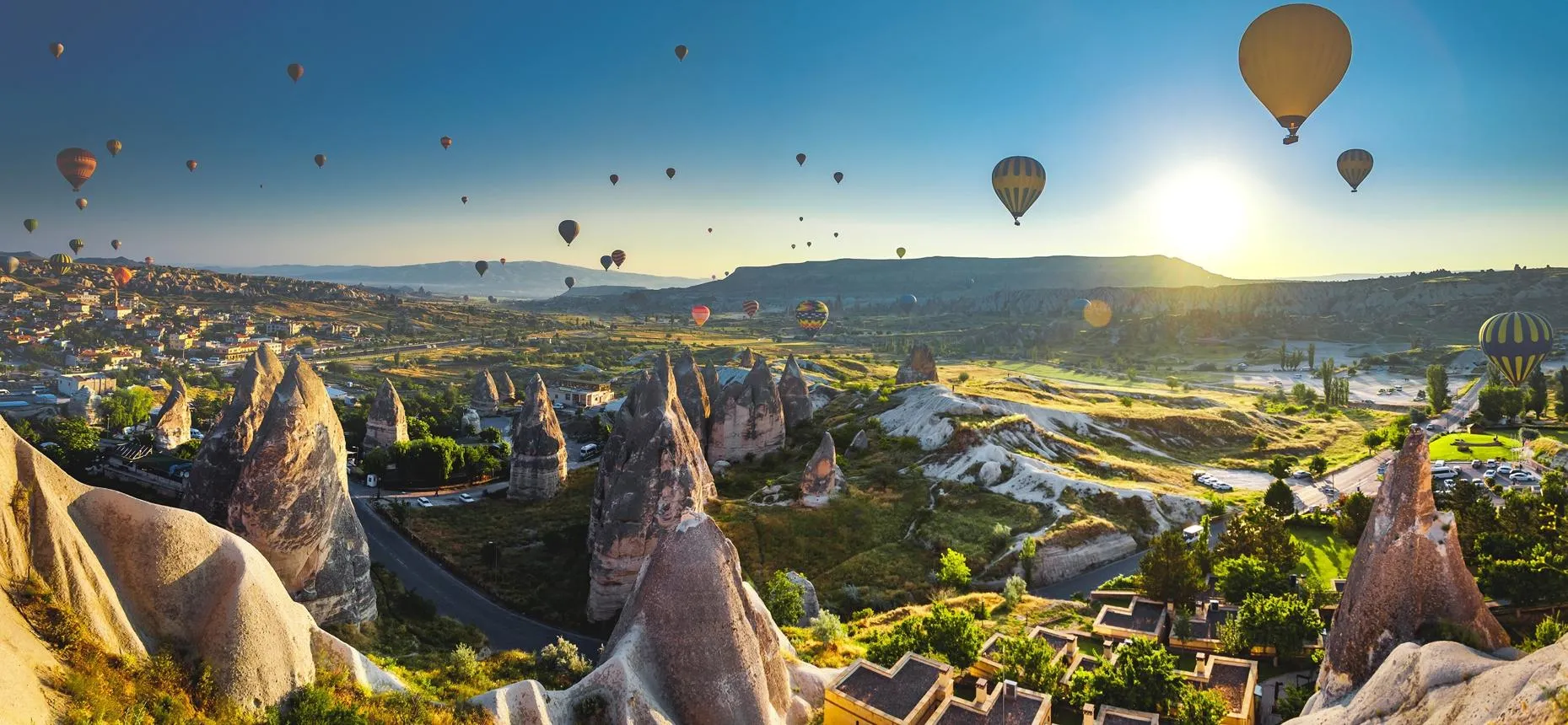
Yes. Balloons fly over the Pamukkale travertines and Hierapolis at sunrise and at sunset, for about 45–60 minutes. Book ahead, keep a spare morning in case the weather cancels the flight, and bring a warm jacket: early mornings can be cold.

What to wear

No: shoes must come off on the travertines to protect them, so bring a bag to carry them. Wear comfortable shoes for Hierapolis, and swimwear if you plan to go into Cleopatra's Pool.

Getting there

Pamukkale is about 20 km from Denizli and about an hour by car from Denizli Çardak Airport. By road it is around three hours from Selçuk and Ephesus, and around three and a half hours from Antalya.

Tailor-made for you

Private Pamukkale tours we can plan

We design every tour around your interests, your dates and your pace. These are some of the journeys our travellers love; each one can be shaped to suit you.

Let's plan your holiday

Plan your private Pamukkale tour

Tell us where your journey begins, which places interest you, how many of you are travelling and how many days you have. We will plan a private Pamukkale experience that fits naturally into your wider Türkiye itinerary, and email it with a price.

  1. 1
    Tell us your wishes

    Choose the places you would love to see, how many of you are travelling and for how long.

  2. 2
    Receive your itinerary

    We write a private programme just for you and email it with a personal price.

  3. 3
    Shape it together

    Change anything you like. We refine the programme with you until it feels just right.

Which places would you like to see?

Mix and match freely: pick places from as many themes as you like.

Pamukkale & Hierapolis
Beyond the terraces
Experiences

Free and without obligation. We reply by email within 24 hours.

Our tour categories

From history and faith to hidden villages and the coast, find the journey that suits you. Every one can include Pamukkale.

Keep exploring

Explore other destinations

All destinations
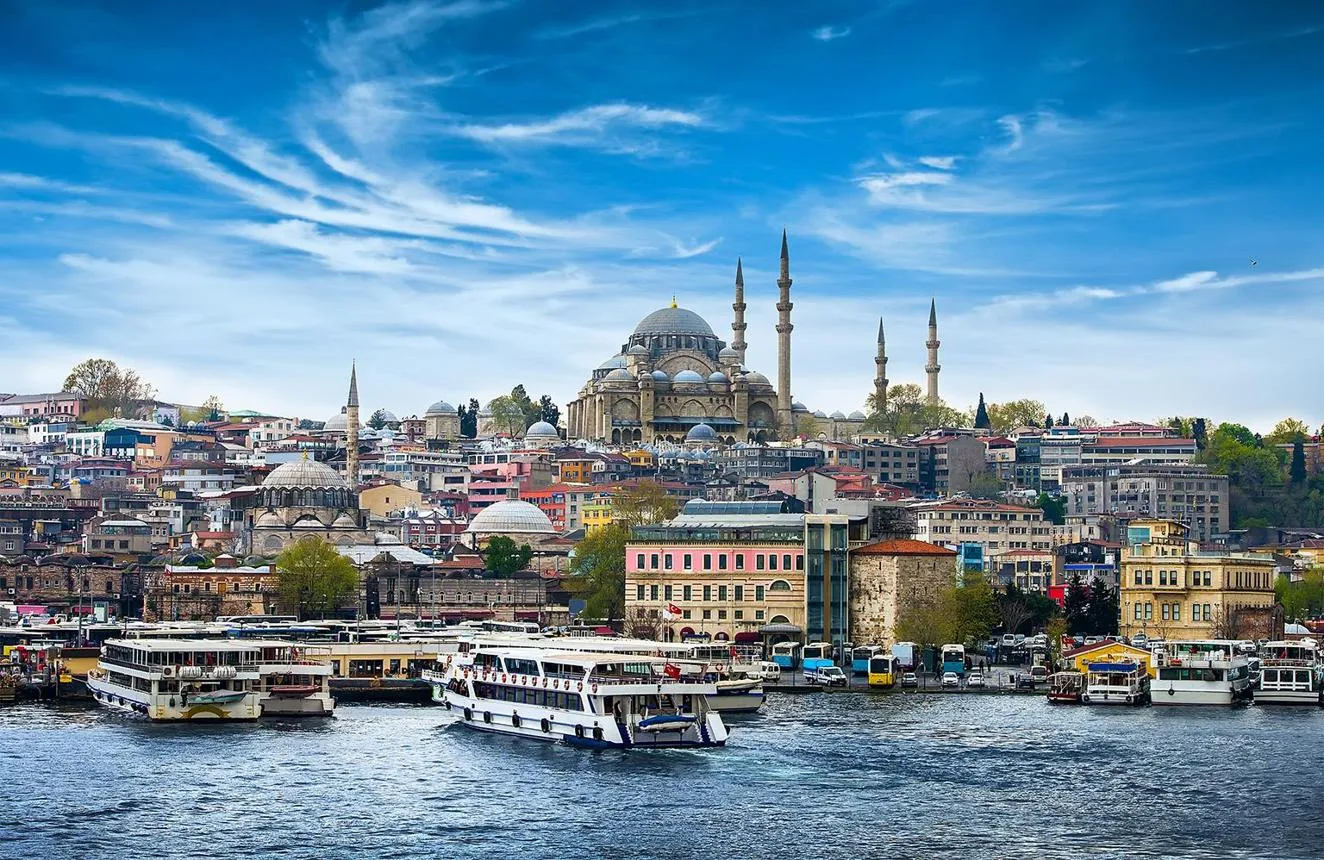
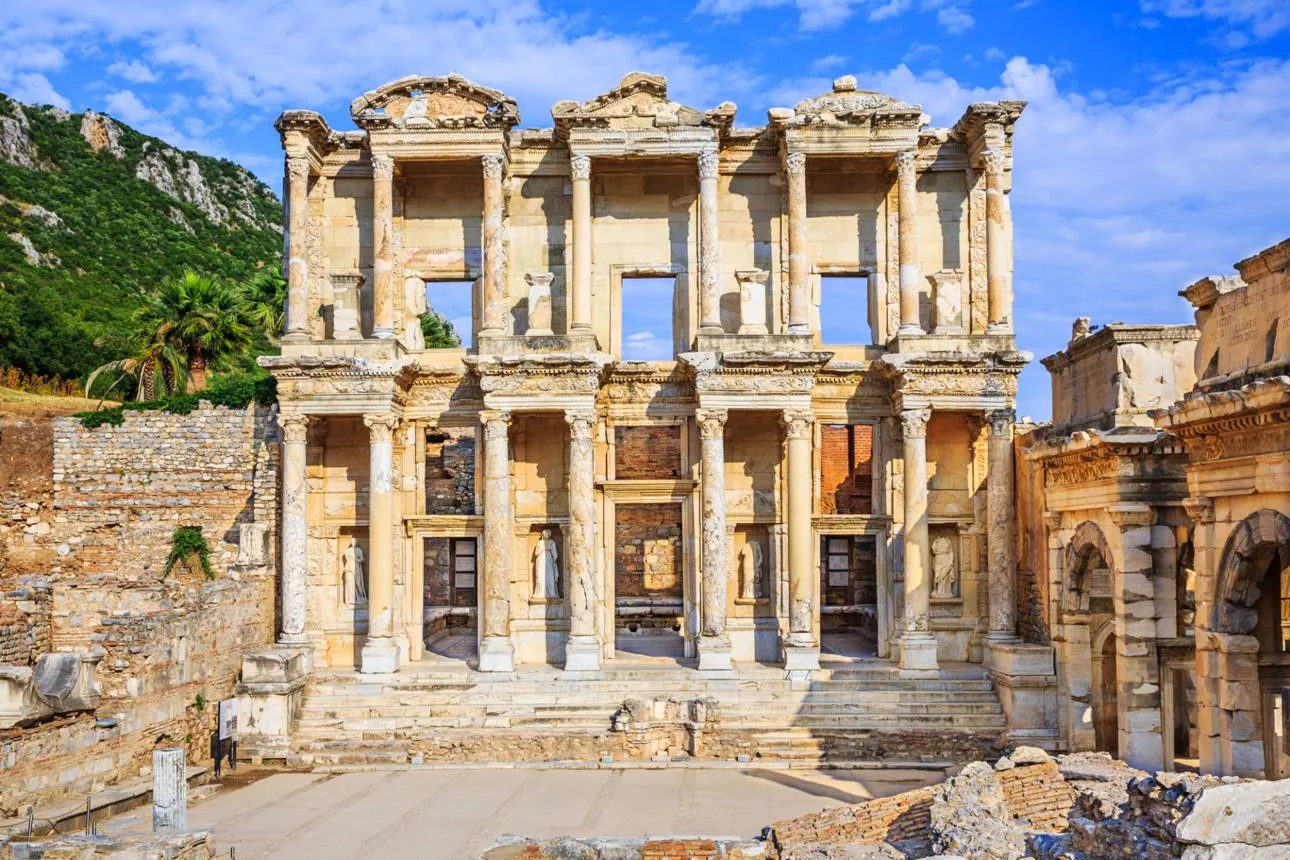
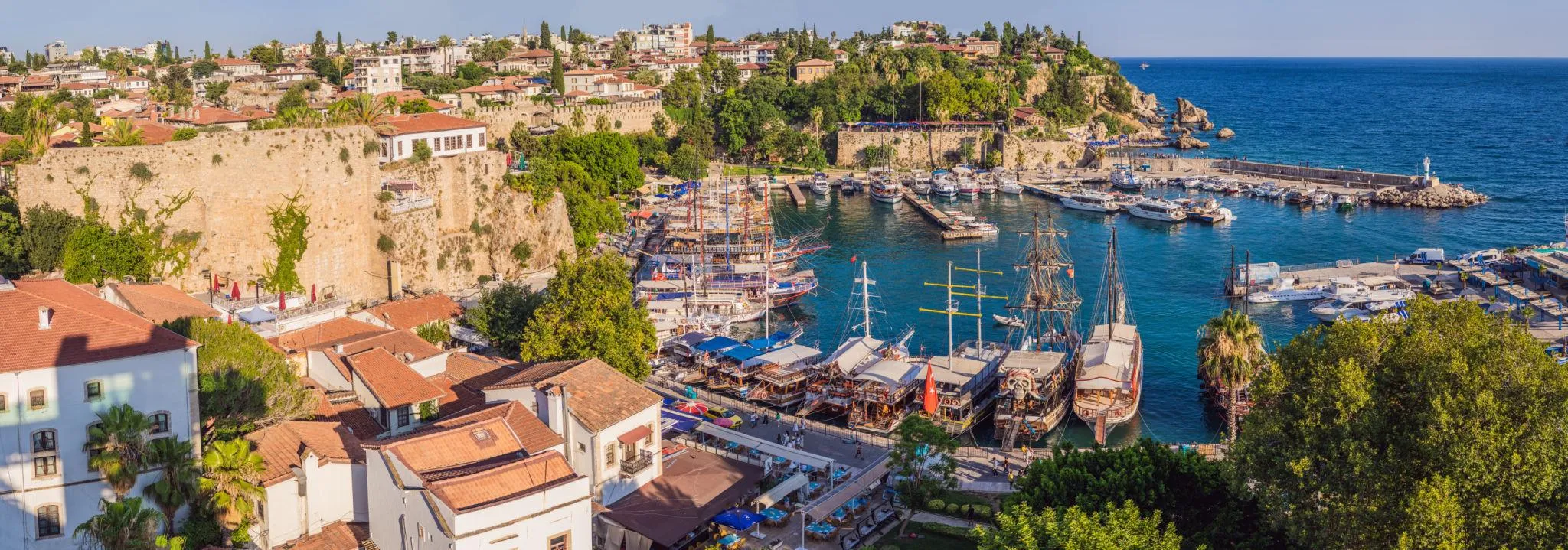
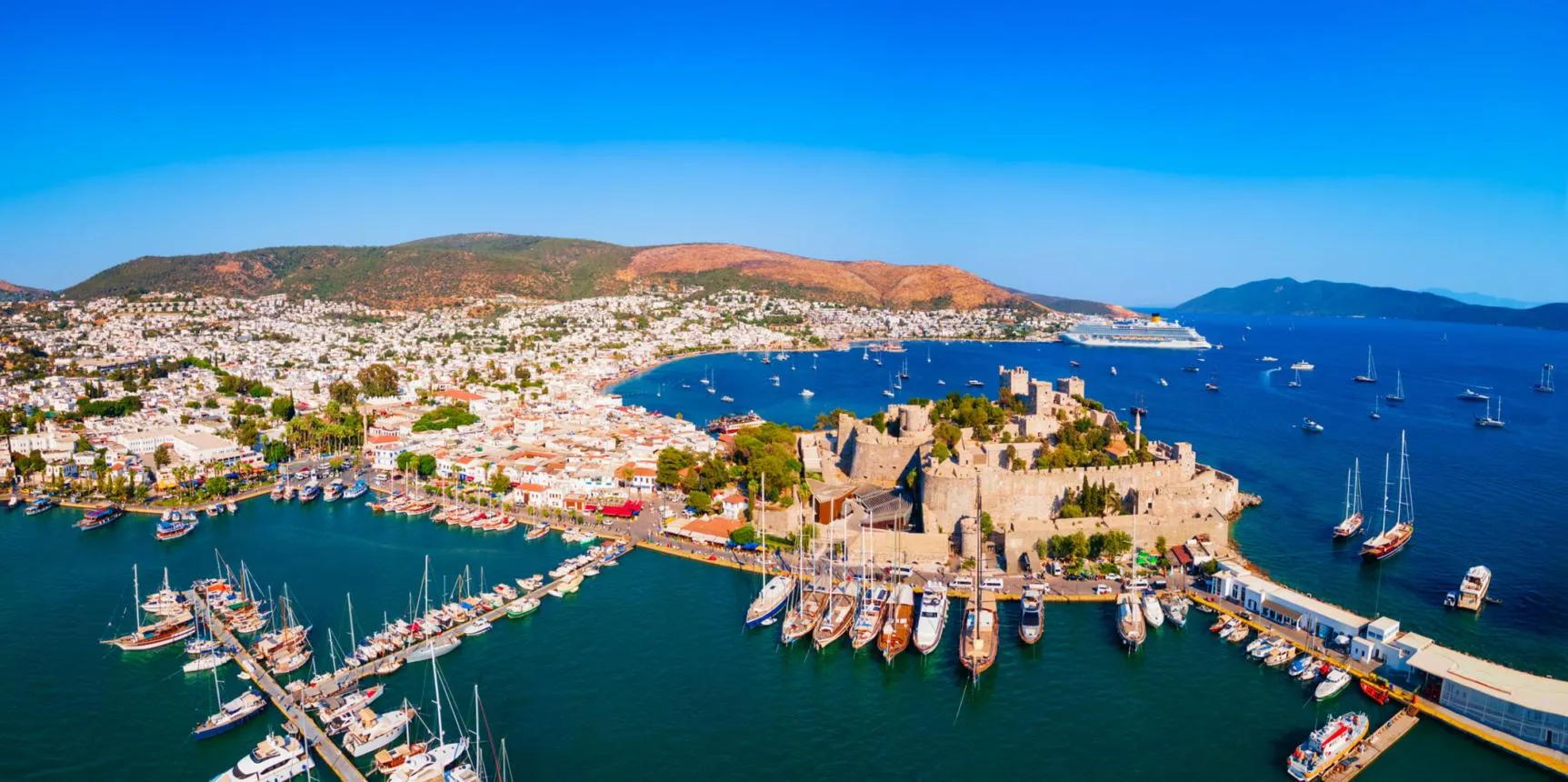
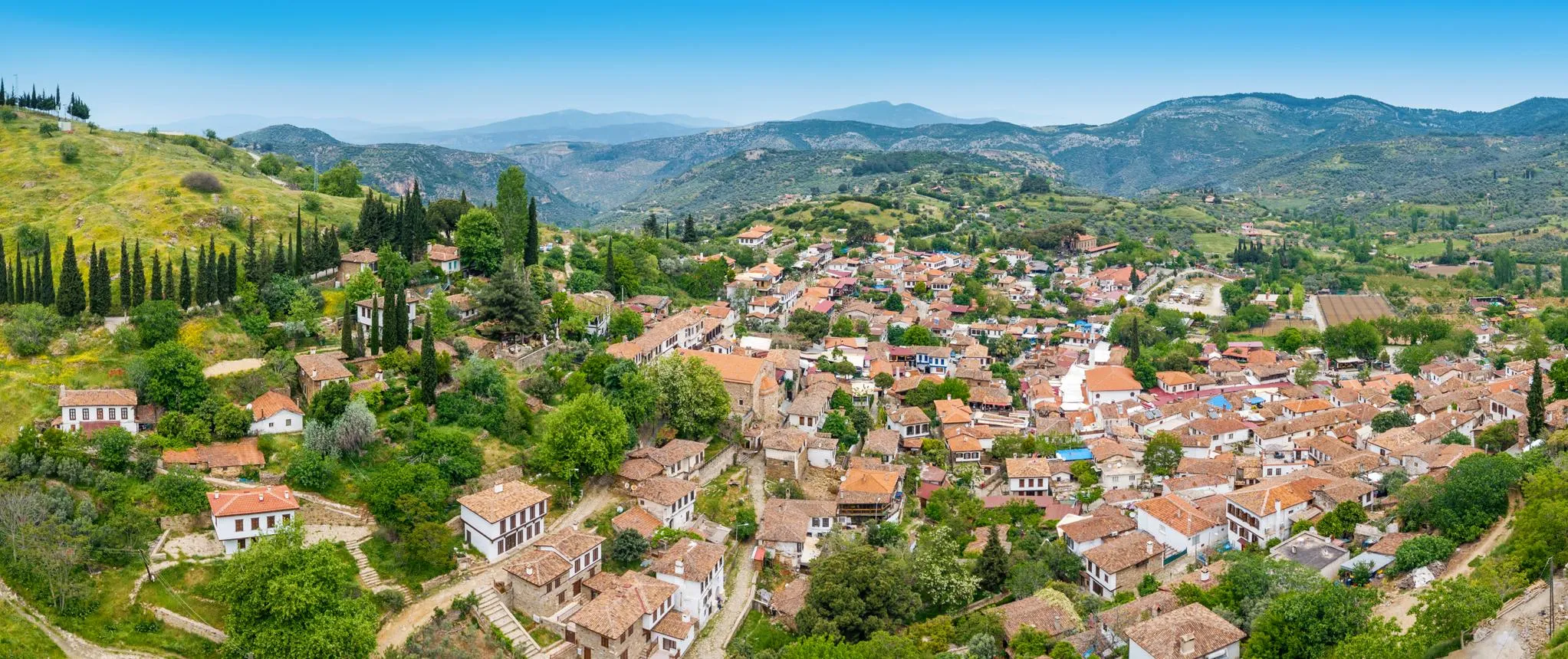
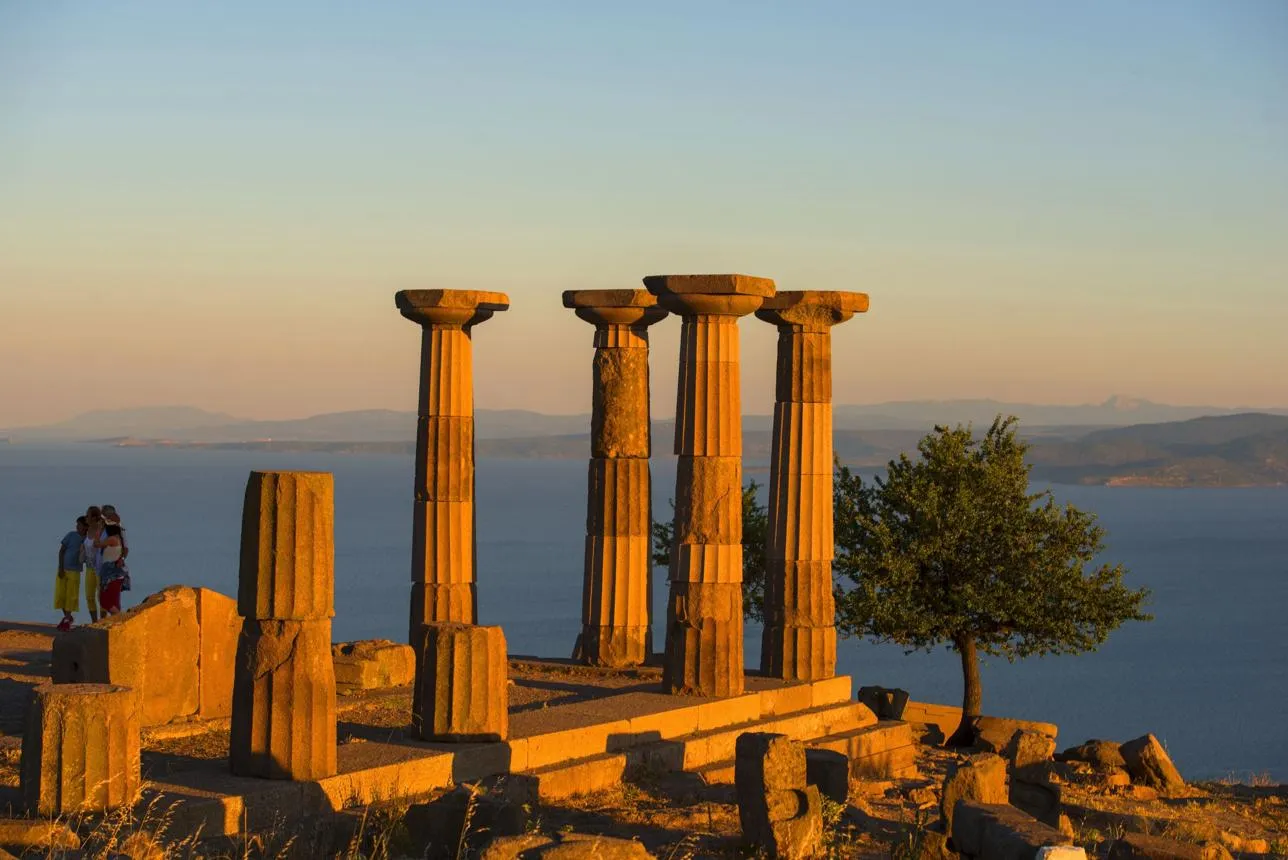
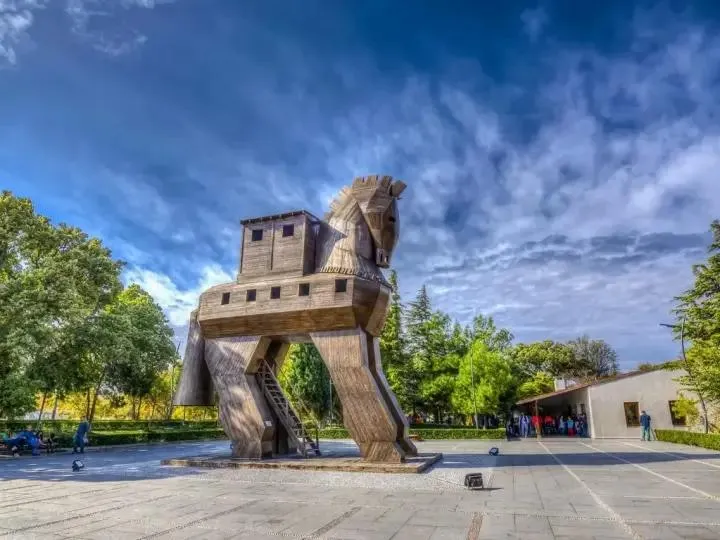
IstanbulMarmaraCappadociaCentral AnatoliaEphesusAegean coastAntalyaMediterranean coastBodrumAegean coastŞirinceAegean hillsAssosNorth AegeanGallipoli & TroyDardanellesKaş & KekovaLycian coastFethiyeLycian coastDalyanMuğla coastAnkaraCentral AnatoliaKonyaCentral AnatoliaSafranboluBlack Sea regionŞanlıurfa & Göbekli TepeSoutheastern AnatoliaMardinSoutheastern Anatolia
Mount NemrutSoutheastern Anatolia

Ready to explore Pamukkale?

Explore Pamukkale with a private, tailor-made tour

Whether you come for the white terraces, the ancient city, the early Christian sites or a wider journey through western Türkiye, we build your private itinerary around your interests, your dates and your pace.

Plan your trip